The Parvo Protocol: Disinfecting for Canine Parvovirus, Step by Step
Last reviewed 2026-08-20
Parvovirus is the disease that built the kennel-disinfectant category. It spreads on surfaces, survives in the environment for months, and finds every gap in a cleaning program. This is the ArkGuard protocol against it — the label’s words turned into a checklist you can post.
Why parvo is the hard case
Most viruses are enveloped: a fragile fat membrane that ordinary disinfection shreds easily. Parvovirus is non-enveloped — a bare protein capsid, one of the toughest structures in the microbial world. Products that “kill 99.9% of germs” routinely do nothing to it. Any parvo claim worth trusting is tested at a specific dilution and printed on the product label.
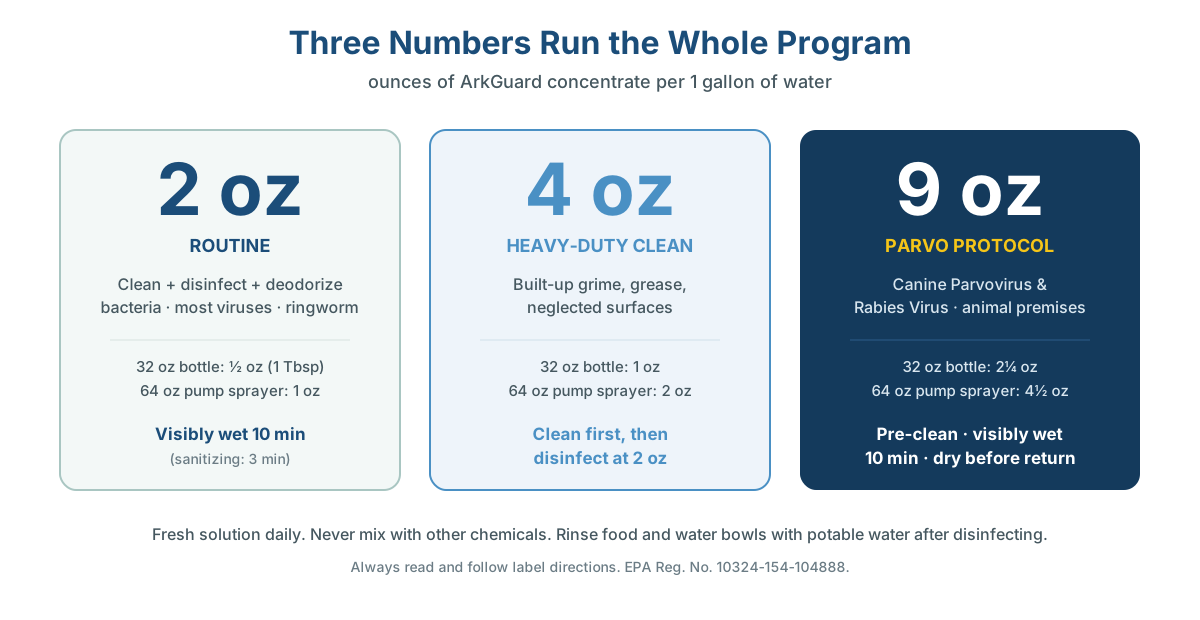
For ArkGuard that dilution is 9 oz per gallon — not the routine 2 oz — delivering about 2,970 ppm of active quat, with a full 10-minute wet contact time on hard, non-porous surfaces.
The protocol
- Clear the area. Remove all animals, plus feed, bowls, bedding, and litter.
- Remove waste and pre-clean. Scrape and dispose of feces and organic debris, then wash surfaces down. Organic soil shields virus from any disinfectant — this step is not optional; it’s in the label directions.
- Mix 9 oz per gallon. Hand-measure it: 9 oz into each gallon of water, 4½ oz into the 64 oz pump sprayer, 2¼ oz into a 32 oz bottle. Don’t delegate this ratio to a hose-end metering head.
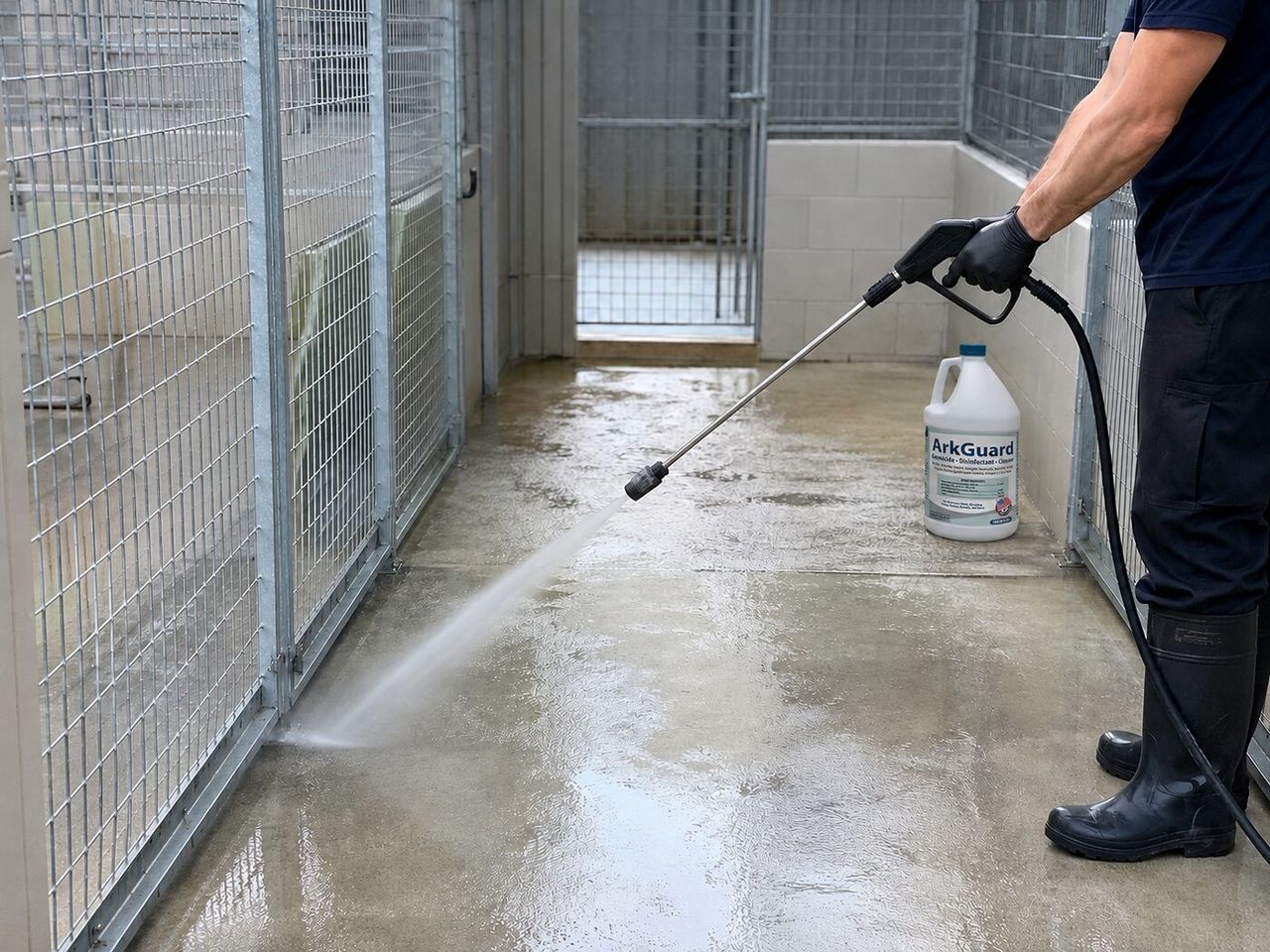
- Apply until visibly wet — and keep it wet 10 minutes. Floors, walls to splash height, kennel bars, latches, door thresholds, drain covers, wheels of anything that rolls. Re-wet anything that dries early.
- Air dry, then restore. Let surfaces dry before animals return. Bowls, feeders and waterers get scrubbed with the solution and then rinsed with potable water before reuse.
- Repeat on a schedule during an outbreak. Fresh solution every time; disinfect footwear at the door with a 2–4 oz/gal foot bath so clean areas stay clean.
The honest limits
We’d rather you trust the label than a slogan, so here is what this protocol does not do:
- It doesn’t disinfect dirt, grass, or gravel. No liquid disinfectant does — porous ground can’t hold a measured wet contact time. Contaminated outdoor runs are managed with waste removal, sunlight, time, and keeping unvaccinated animals off them; ask your veterinarian about how long.
- It doesn’t replace vaccination. Environmental control and vaccination are the two legs parvo prevention stands on; neither works alone.
- It doesn’t work as a quick wipe. Ten visibly-wet minutes is the tested condition. A spray that dries in two minutes on warm concrete has not met the label — contact time is the whole game.
After the all-clear
Step the facility back to the routine 2 oz/gal program — it maintains the baseline against the everyday pathogen traffic (Bordetella, coronavirus, distemper, influenza, ringworm) while staying easy on labor and cost. Keep one labeled parvo-strength sprayer ready in isolation; the day you need it is not the day to look up the ratio.
Frequently asked
What ratio of ArkGuard kills canine parvovirus?
9 oz of concentrate per gallon of water, applied to pre-cleaned hard, non-porous surfaces and kept visibly wet for 10 minutes, per the label's animal-premises directions.
Does the regular 2 oz per gallon mix kill parvo?
No. The parvovirus and rabies claims exist only at the 9 oz per gallon dilution. Using the routine rate against parvo is the most common and most dangerous dilution mistake in kennels.
How long does parvovirus survive in the environment?
Veterinary references report parvovirus persisting for months and even a year or more in soil and protected environments, which is why contaminated grass and dirt runs cannot be considered disinfected — only time, sunlight, and restricted access manage them.
Can puppies come back into a treated area right away?
Treated surfaces must stay visibly wet for the full 10 minutes and then dry before animals return. Unvaccinated puppies should not be introduced into a known-contaminated area at all until your veterinarian advises it.