
The Hose-End Sprayer: Which Dial Setting to Use
Last reviewed 2026-08-21
The sprayer has a dial. You have a job to do. Here’s the whole decision:
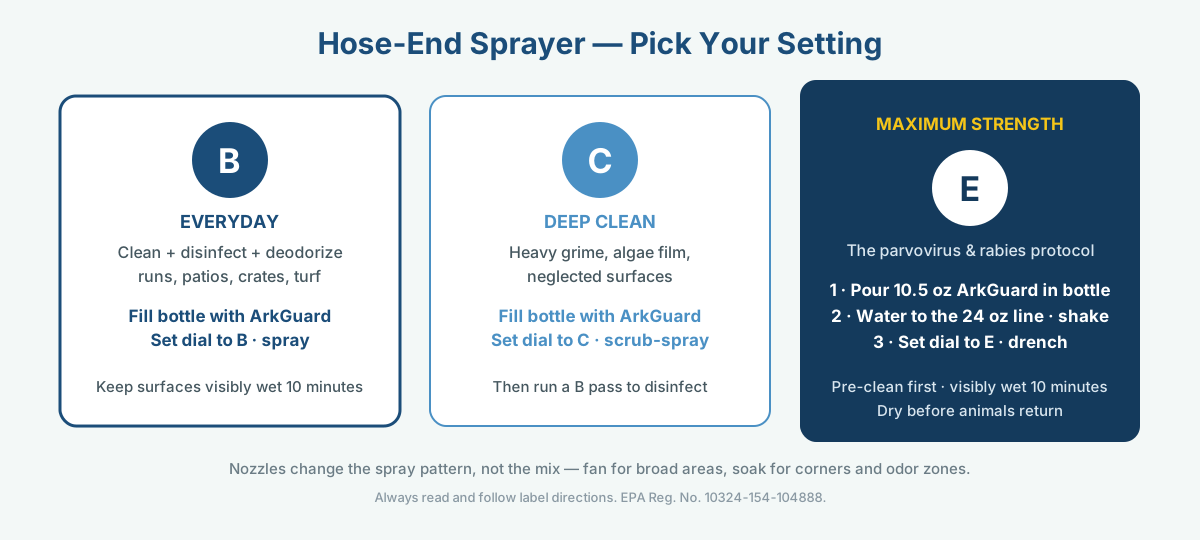
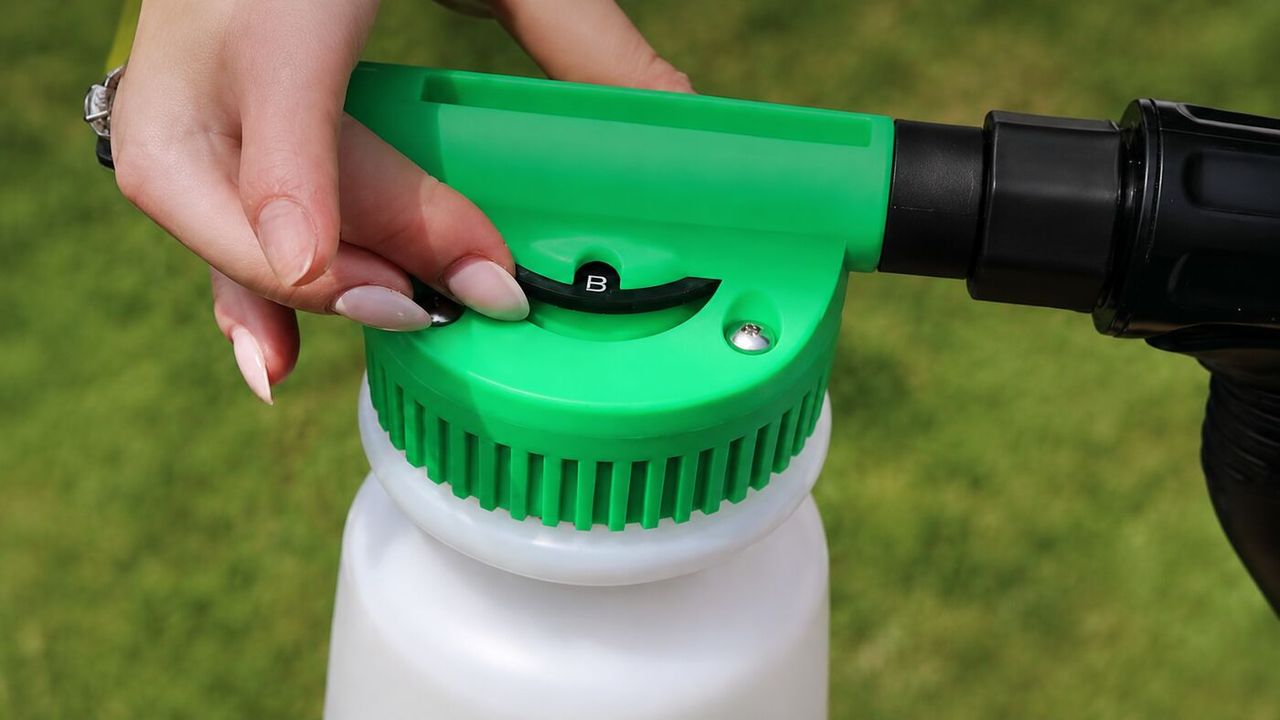
Setting B — everyday disinfecting
This is the dial’s home position. Fill the bottle with straight ArkGuard concentrate, set the dial to B, and spray until everything is visibly wet — then keep it wet 10 minutes. Runs, patios, crates, kennel rows, turf: this one setting cleans, disinfects, and deodorizes in a single pass, and a full 24 oz bottle covers roughly 9½ gallons of applied solution — an entire bank of outdoor runs on one fill.
Setting C — deep cleaning
For surfaces that have gotten away from you — caked grime, algae film, a neglected patio — dial C draws a stronger cleaning mix that strips the buildup. Deep-clean on C, then come back over the surface on B to disinfect (why it’s two passes).
Setting E — maximum strength: the parvo protocol
When you need the most killing power the label offers — Canine Parvovirus and Rabies Virus country — use dial E with the measured pre-mix:
- Pour 10.5 oz of ArkGuard concentrate into the sprayer bottle (use the ounce markings).
- Add clean water to the 24 oz line. Cap and shake well.
- Set the dial to E and drench every surface.
- Keep everything visibly wet for 10 minutes, re-wetting as needed — after pre-cleaning, and with surfaces dry before animals return.
Why the pre-mix? The parvo protocol calls for a 9 oz per gallon solution — stronger than any dial delivers with straight concentrate. The E pre-mix lands it at about 9.3 oz/gal, at full protocol strength. Each bottle drenches about 1.1 gallons of finished solution — sized for a contaminated run or two. For indoor parvo work (isolation rooms, whelping areas), the pump sprayer with 4½ oz per half-gallon gives you the same strength with more control.
The math, if you want to check us
The dial meters bottle solution into the hose stream. B is a 1:50 draw — 1 part in 51 total, and a gallon is 128 oz, so 128 ÷ 51 ≈ 2.5 oz of concentrate per sprayed gallon, right at the routine label rate. C (1:30) works out to ≈4.1 oz/gal, the heavy-duty cleaning rate. The E pre-mix: 43.75% concentrate drawn at 1:5 ≈ 9.3 oz/gal, meeting the 9 oz/gal the parvo and rabies claims require. (The remaining dial positions land between the label’s rates, which is why the ArkGuard program only uses B, C, and E.)
Nozzles: pattern, not strength
The six nozzle modes change the spray pattern, never the mix. Fan nozzle for broad coverage — turf, patios, kennel rows. Soak nozzle for targeted saturation — corners, fence posts, drain surrounds, concentrated odor zones. Pick the pattern for the surface; the dial owns the strength.
After every session
Dump leftover mix, refill the bottle with clean water, and spray for about a minute to flush the head and suction pipe — especially between different products (residue quietly weakens quats). Store the bottle empty and open.
The cheat sheet
B = every day. C = deep clean. E + pre-mix = maximum strength. Write it on the sprayer with a paint pen and nobody on your team will ever have to guess.
Frequently asked
What dial setting should I use for everyday disinfecting?
Dial B, with the bottle filled with straight ArkGuard concentrate. That delivers about 2.5 oz per gallon of water — the routine clean-disinfect-deodorize strength. Keep surfaces visibly wet for 10 minutes.
What setting kills parvo?
Maximum strength is dial E with the pre-mix: pour 10.5 oz of concentrate into the sprayer bottle, add water to the 24 oz line, shake, set the dial to E, and drench. That delivers about 9.3 oz per gallon — the strength the parvovirus and rabies protocol requires — kept visibly wet for 10 minutes after pre-cleaning.
Do I put straight concentrate in the bottle?
For B and C, yes — straight concentrate, and the dial does the diluting. Maximum strength on E uses the measured pre-mix instead.
Why does the sprayed surface need to stay wet 10 minutes?
The killing happens during wet contact time, not at the moment of spraying. Walk slowly, overlap passes, and re-wet anything that dries early — sun-baked concrete and turf dry fast.