
Mopping With ArkGuard: Floors, Kennels & the No-Rinse Question
Last reviewed 2026-08-20
Mopping is where cleaning programs quietly fail. The product is right, the dilution is right — and the mop water has been gray since the third kennel. Here’s the whole system, by the label.
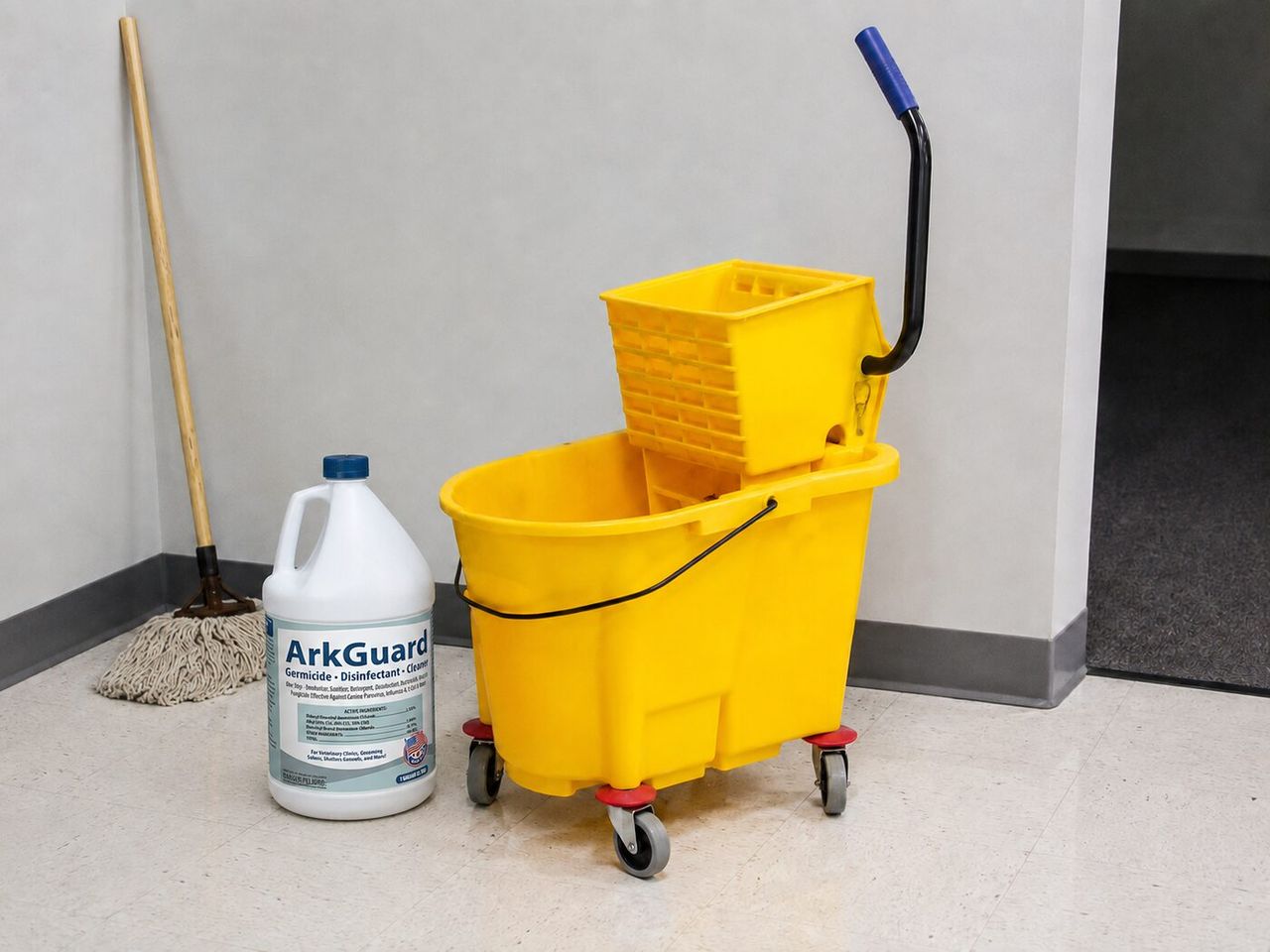
The bucket recipe
2 oz of ArkGuard per gallon of water. A standard 4-gallon mop bucket takes 8 oz — one measured cup. For greasy or heavily soiled floors, the label allows a heavy-duty 4 oz per gallon cleaning rate; clean first at that rate, then disinfect with a fresh 2 oz/gal pass.
Apply generously enough that the floor stays visibly wet for 10 minutes. A damp-mop shine that flashes dry in ninety seconds cleaned the floor but didn’t disinfect it — wet contact time is where the killing happens (here’s why).
The no-rinse rule (and its exceptions)
For ordinary floors the label is explicit: rinsing is not necessary unless the floor will be waxed or polished. Let it air dry — the quat film keeps working as it sits.
The exceptions are anything mouths touch: food and water bowls, feeders, waterers, and food-contact surfaces get a potable water rinse after disinfection, every time. And animals stay off the floor until it’s dry.
Mop discipline
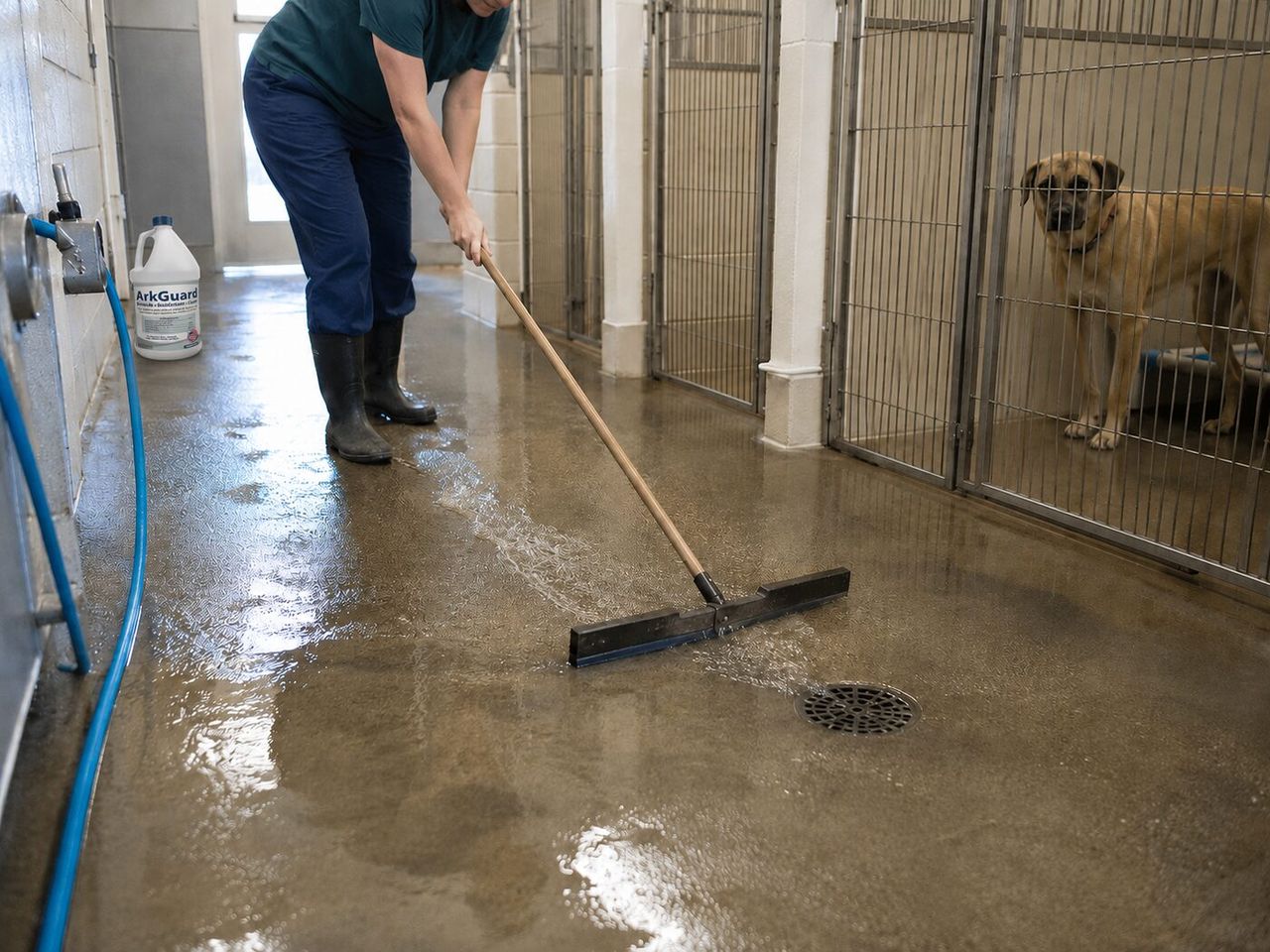
- Two buckets beat one. A wringer bucket with dirty water and a dosing bucket with fresh solution keeps you from painting the floor with yesterday’s soil.
- Change water when you can’t see the bottom. Soil load deactivates any disinfectant — ArkGuard’s label efficacy is tested at 5% soil, but gray-brown mop water is far past that.
- Launder mop heads and let them dry. A sour mop head is a bacteria log rolling across your floor. (ArkGuard has no laundry-sanitizer claim, so run mop heads through a hot wash cycle — we say so plainly because the label does.)
- Immersion works too. The label covers soaking equipment — forks, scrapers, squeegees, halters — in the 2 oz/gal solution. A soak tub by the mop sink handles tools while you do floors.
- Fresh daily. Mix, mop, dump. Solution left standing overnight collects soil and loses its punch.
Floor types
ArkGuard is for hard, non-porous surfaces: sealed concrete, epoxy, tile, vinyl, stainless thresholds. Bare unsealed concrete and raw wood are porous — the label doesn’t claim disinfection there, which is one of the honest reasons to seal kennel floors. For runs and outdoor slabs, the hose-end sprayer applies the same solution faster than any mop.
Frequently asked
Do I need to rinse floors after mopping with ArkGuard?
Rinsing of floors is not necessary unless they are to be waxed or polished. Surfaces that contact food or water — bowls, feeders, waterers, prep counters — always get a potable water rinse.
How much ArkGuard per mop bucket?
2 oz per gallon of water for routine cleaning and disinfecting — so a typical 4-gallon bucket takes 8 oz. Use 4 oz per gallon for heavy-duty cleaning.
How often should mop water be changed?
Prepare fresh solution daily at minimum, and change it as soon as it is visibly dirty. Dirty mop water redeposits soil and stops disinfecting.