
Ringworm: The Six-Week Problem That Starts With One Spot
Last reviewed 2026-08-21
Ringworm is the most misnamed disease in animal care — no worm, no ring required — and one of the most stubborn, because the patient is only half the problem. The other half is every hair the patient has shed since it got infected, each one carrying fungal spores that stay infectious in the environment for months. Treat the cat, skip the building, and the building reinfects the cat. That’s the six-week cycle every groomer and cattery manager has lived through once and never forgets.
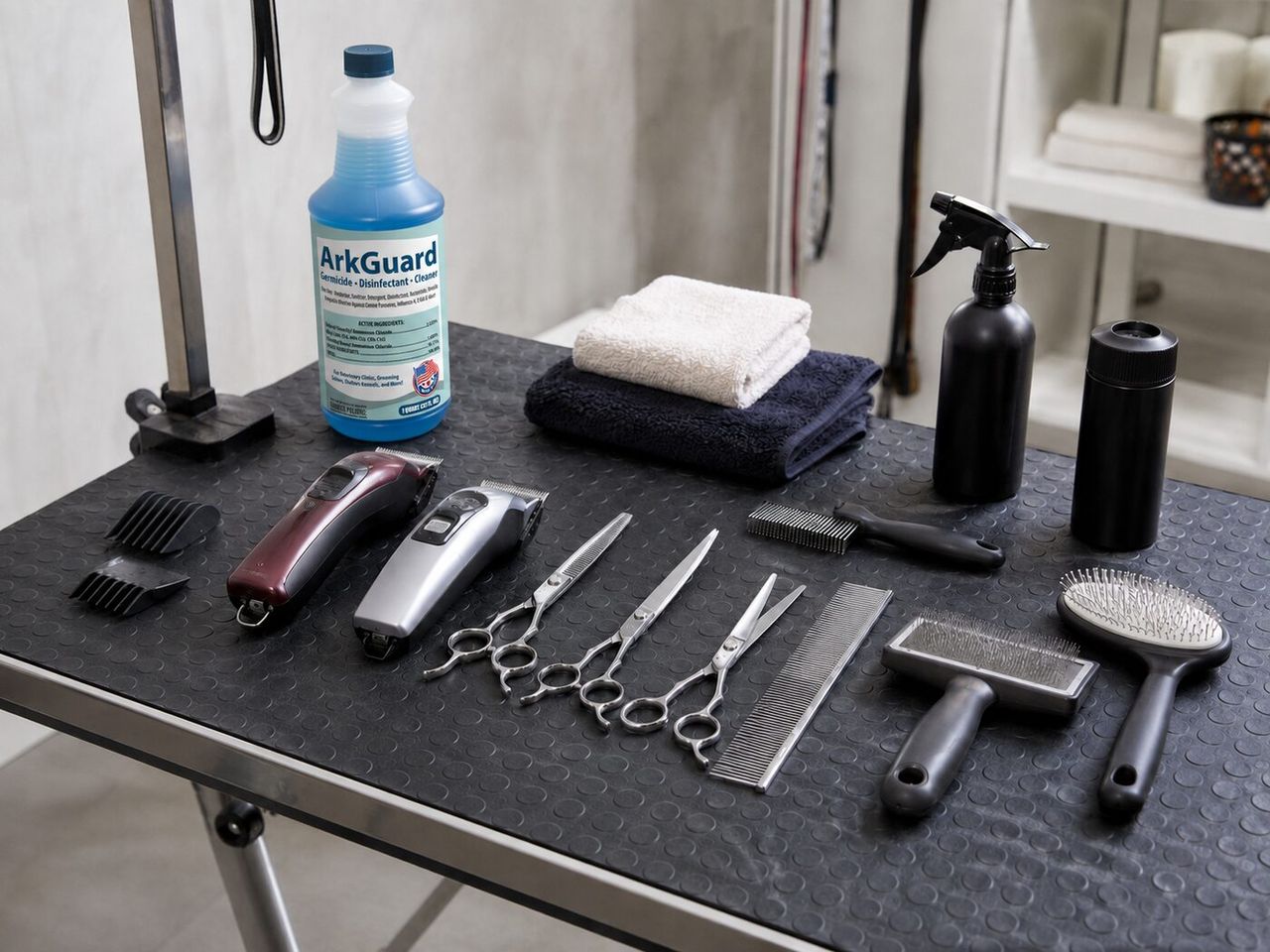
Know the enemy
The culprits are dermatophytes — skin fungi, with Trichophyton on the marquee. They eat keratin: hair, skin, nail. Spread is by contact with an infected animal or anything its hair touched: brushes and clipper blades (the classic salon route), bedding, carriers, cage corners, scratching posts, human sleeves. Kittens, puppies, and stressed shelter animals with immature or suppressed immunity are the easiest targets — and it’s zoonotic, so the ring on a staffer’s forearm is often the outbreak’s first confirmed diagnosis.
The two-front war
Front one — hard surfaces and tools. This is labeled territory: ArkGuard’s fungicidal claims include Trichophyton at the routine 2 oz/gal, 10 minutes visibly wet on hard, non-porous surfaces. Tables, tubs, cage banks, carriers, and floors get the standard protocol; pre-cleaned combs, blades, and shears get the label’s 10-minute immersion, then a rinse and full dry. Hair removal comes first, always — spores ride hair, so vacuuming and lint-rolling the area before disinfecting removes most of the enemy’s transport fleet. (Then empty the vacuum outside; its bag is now a spore bank.)
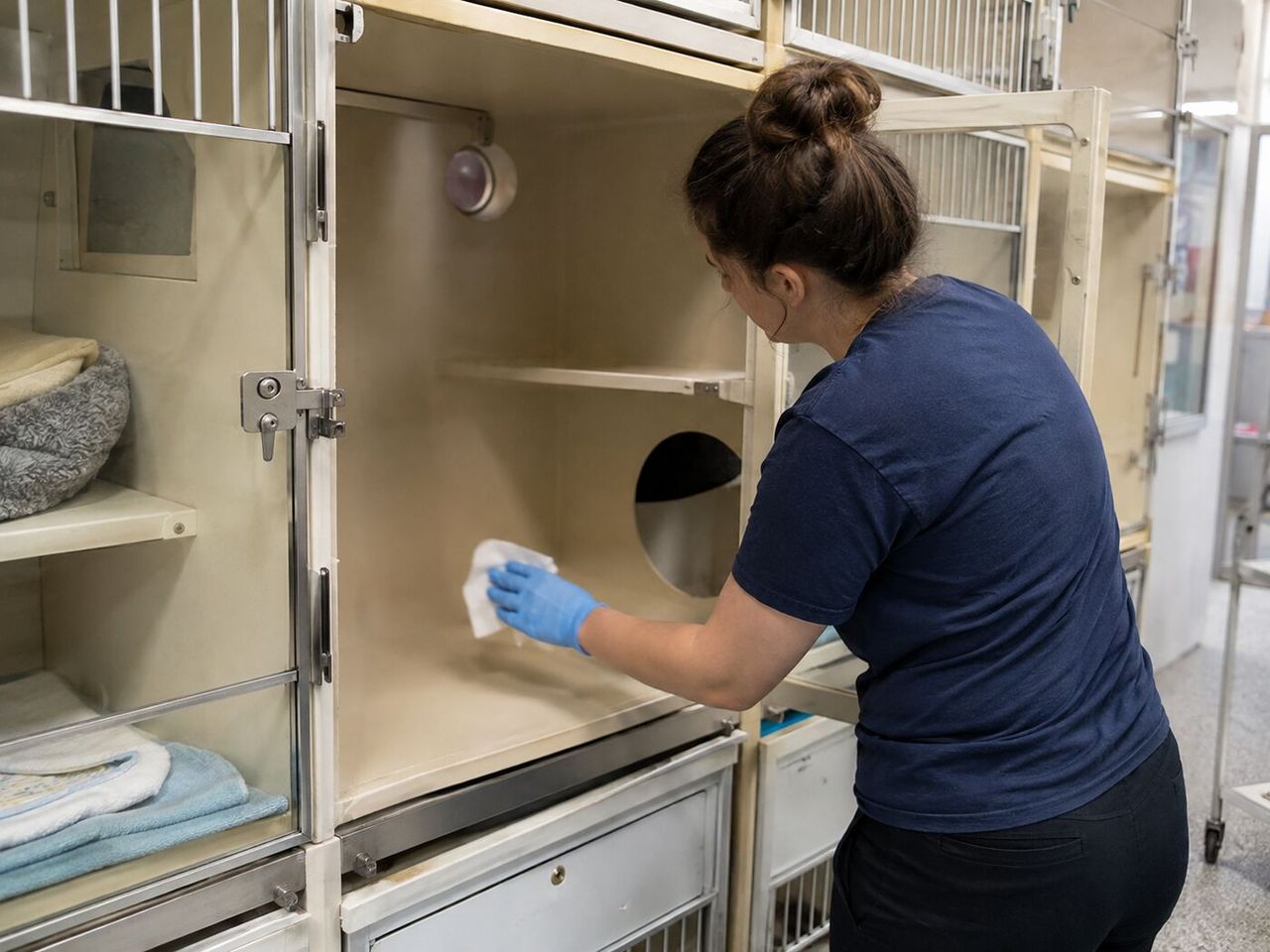
Front two — everything porous. Bedding, towels, plush toys, fabric grooming loops: hot laundry or the trash, per the porous-surface rule. No surface spray fixes fabric, and ringworm punishes anyone who pretends otherwise.
The protocol that ends it
Confirmed case: isolate the animal and start the vet’s treatment; strip its housing; vacuum and hair-hunt the room; disinfect every hard surface at 2 oz/gal with the full wet time; tools to the soak; fabric to hot wash or disposal; repeat the environmental pass on your veterinarian’s schedule (commonly weekly) until cultures clear. It’s tedious — and it’s the difference between a two-week problem and a six-month one.
Frequently asked
Does ArkGuard kill ringworm on surfaces?
ArkGuard carries fungicidal claims including Trichophyton — the ringworm fungus — at 2 oz per gallon with a 10-minute wet contact time on hard, non-porous surfaces: tables, tubs, cage banks, and pre-cleaned tools.
How does ringworm spread without direct contact?
Every infected hair that falls carries spores, and the spores survive in the environment for months. Brushes, clippers, bedding, cage corners, and even vacuum contents keep re-seeding infection long after the animal looks healed.
Can people catch ringworm from pets?
Yes — ringworm is zoonotic, and children and immunocompromised people are most susceptible. An environmental cleanup protects the humans in the building as much as the animals.