
Canine Distemper: The Old Killer That Never Left
Last reviewed 2026-08-21
Distemper is the disease your grandparents vaccinated their dogs against, and it never went away — it just moved to where the unvaccinated dogs are. Today that means shelters, rescues pulling from rural intake, imported puppies of unknown history, and any community where vaccination rates slip. When it gets into a building, it is devastating: a virus that attacks the respiratory system, the gut, and then the brain, with survival often depending on how young the victim is.

Know the enemy
Canine Distemper Virus is a relative of human measles — and like measles, it is ferociously contagious among the unprotected and largely a non-event among the vaccinated. It spreads mainly through airborne droplets and fresh secretions: a sneeze across an aisle, a shared water bowl, discharge wiped from a nose to a hand to a latch. Puppies in the immunity gap — past maternal antibodies, before full vaccination — are its preferred victims.
The one mercy: distemper is an enveloped virus, wrapped in a fragile fat membrane. Unlike parvovirus, it does not survive long in the environment, and it is not the disinfection challenge parvo is.
Where surfaces fit
Because the virus dies relatively quickly outside a host, environmental control is genuinely effective — there’s no months-long soil reservoir to fight. Canine Distemper Virus is on ArkGuard’s labeled kill list at the routine 2 oz/gal, 10 minutes visibly wet, which means standard housing turnover between animals, plus bowl and shared-item discipline, closes the surface route completely.
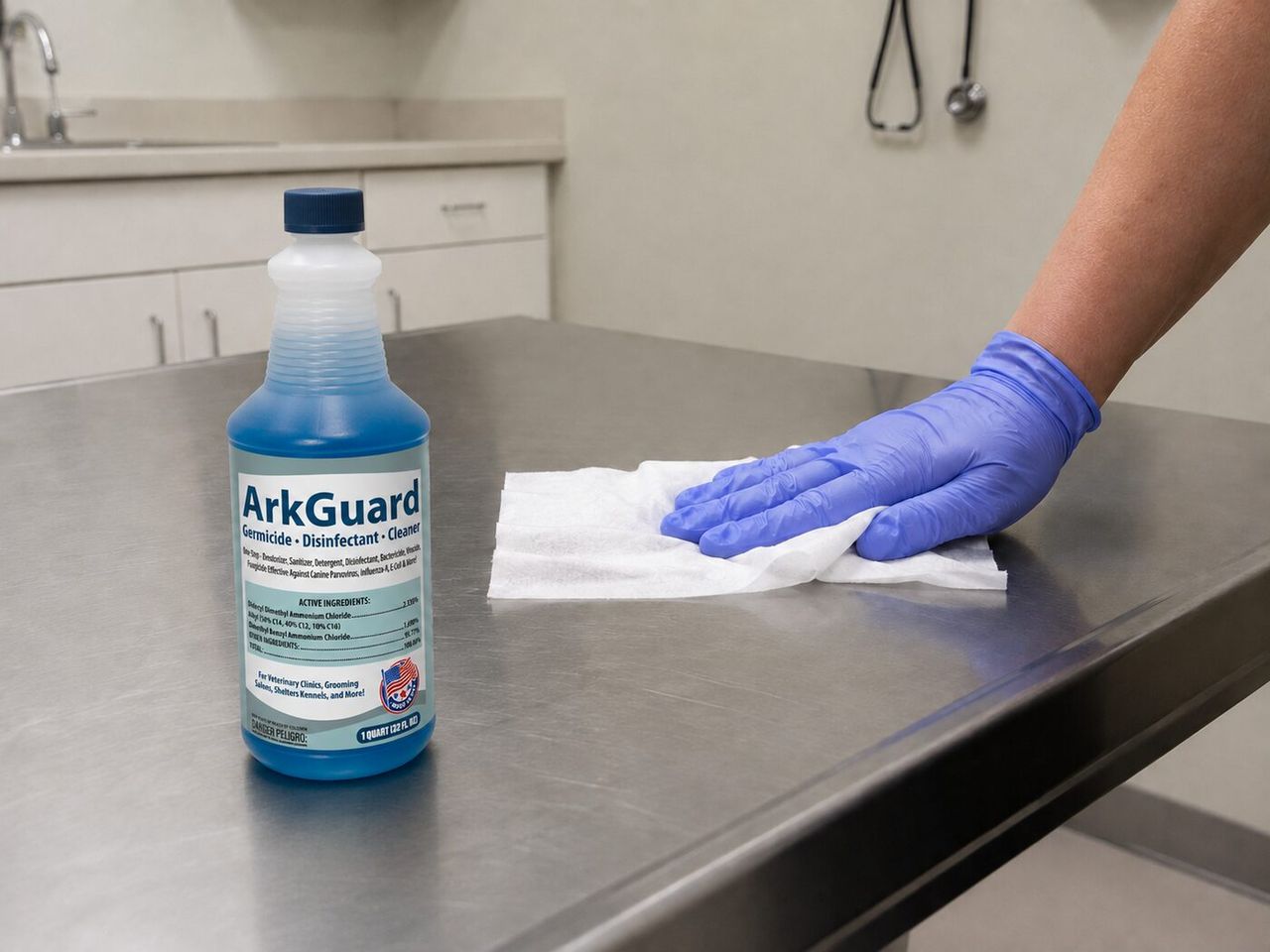
The shelter playbook: intake housing disinfected between every animal, unvaccinated puppies physically separated from intake traffic, and vaccination on intake — the single most powerful distemper tool in existence. Surface work buys time and blocks the fomite route; vaccine ends the story.
The honest summary
Distemper defense is 80% vaccination, 20% environment — but that 20% is fully on the label at the everyday dilution, and it’s the 20% a facility controls the same day an outbreak starts. Run the routine program, isolate the sick, vaccinate on intake, and distemper stays a story from somewhere else.
Frequently asked
Does ArkGuard kill canine distemper virus on surfaces?
Canine Distemper Virus is on ArkGuard's labeled virucidal list at 2 oz per gallon with a 10-minute wet contact time on hard, non-porous surfaces.
How does distemper spread?
Primarily through airborne droplets and direct contact with an infected animal's secretions — but those secretions land on bowls, floors, and hands, which is why housing turnover and shared-item discipline matter in shelters.
Why is distemper such a shelter problem?
It strikes hardest at unvaccinated animals — exactly the population shelters take in daily — and infected dogs can shed virus before showing clear symptoms, so it enters buildings undetected.