
Canine Influenza: When Dog Flu Hits a Full Boarding Calendar
Last reviewed 2026-08-21
Dog flu outbreaks make the local news in a way kennel cough never does, and the reason is arithmetic: when canine influenza enters a naive population, nearly every exposed dog gets infected — because unlike human flu, almost no dog has met it before. A daycare with forty dogs doesn’t get three cases; it gets thirty-five, with a handful progressing to pneumonia and one very bad week for everyone.

Know the enemy
Canine influenza (the H3N8 strain, which jumped from horses to dogs) spreads exactly like the flu you know: coughed and sneezed droplets, direct nose-to-nose contact, and contaminated surfaces and hands. Dogs shed virus heavily in the first days — often before obvious symptoms — which is how it walks into buildings past a healthy-looking front door. Fever, cough, nasal discharge follow; most recover in two to three weeks.
Its weakness is structural: influenza is an enveloped virus, and its envelope is fragile. Off a host, on a dry surface, it fades within a day or two — and it surrenders readily to labeled disinfection.
The surface protocol
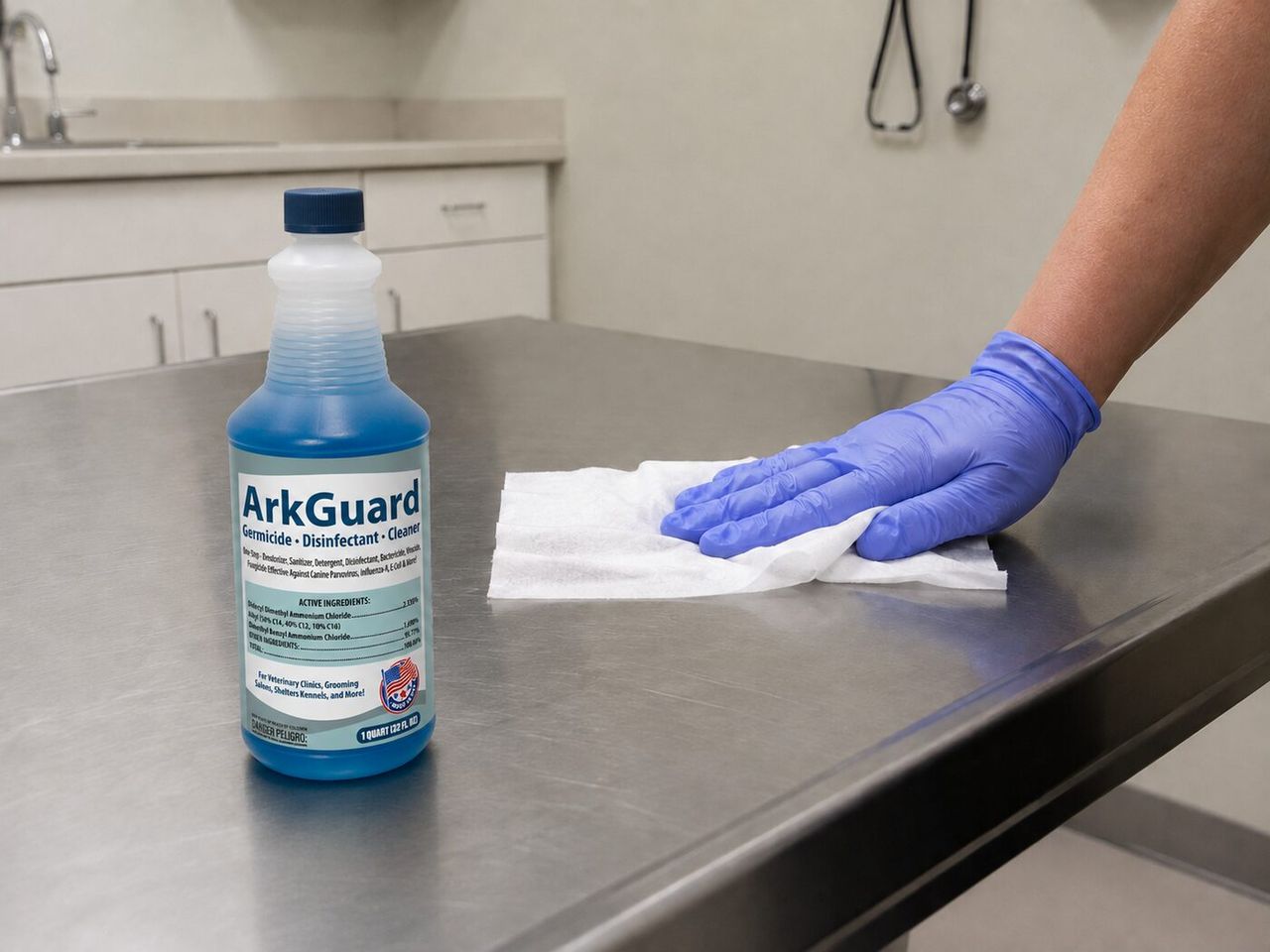
Canine Influenza (H3N8) is on ArkGuard’s kill list at the routine 2 oz/gal dilution, 10 minutes visibly wet. During flu season or a regional outbreak, the containment points are the objects that travel between dogs: water bowls (disinfect, potable rinse), grooming tables between every dog, transport crates between every passenger, lobby floors, and gate hardware. Human hands ferry flu efficiently — hand hygiene between animals is part of the surface program whether it feels like it or not.
The operational moves
Containment is speed: send symptomatic dogs home immediately, pause group play at the first confirmed case, run the full-facility pass nightly, and hold the line for the shedding window (your veterinarian will set the timeline — commonly several weeks for influenza). Facilities in outbreak regions often require the canine influenza vaccine for boarding, which blunts the every-dog-gets-it arithmetic.
Flu is the disease where the environmental fight is genuinely winnable — a fragile virus, a labeled kill at the everyday dilution, and a 10-minute wet rule that costs nothing but discipline.
Frequently asked
Does ArkGuard kill canine influenza on surfaces?
Canine Influenza Virus (H3N8) is on ArkGuard's labeled virucidal list at 2 oz per gallon with a 10-minute wet contact time on hard, non-porous surfaces — and influenza's fragile envelope makes it one of the more surface-vulnerable viruses a facility faces.
How is dog flu different from kennel cough?
Kennel cough is usually a days-long nuisance; canine influenza infects nearly every exposed dog because the population has little natural immunity, and a fraction develop pneumonia. The operational response is similar but faster and stricter.
How long does flu virus last on bowls and floors?
Influenza viruses can stay infectious on hard surfaces for a day or more, and on hands long enough to ferry between dogs — which is why bowls, latches, and human hands are the containment points between grooming or boarding appointments.