Wood, Carpet & Porous Surfaces: The Honest Boundary of Every Disinfectant
Last reviewed 2026-08-20
Every page on this site repeats one phrase: hard, non-porous surfaces. This page is about everything else — because the difference between a facility that beats disease and one that chases it is usually knowing exactly where the chemistry stops.
Why porous kills the claim
Disinfection is a wet film held on a surface for a measured time (the contact-time rule). Porous materials break both halves: they drink the film (no wet time) and they harbor microbes inside the material (below any film’s reach). This is physics, not formulation — it’s equally true of every quat, every peroxide, every bleach on the market. A brand that claims otherwise is telling you something about the brand.
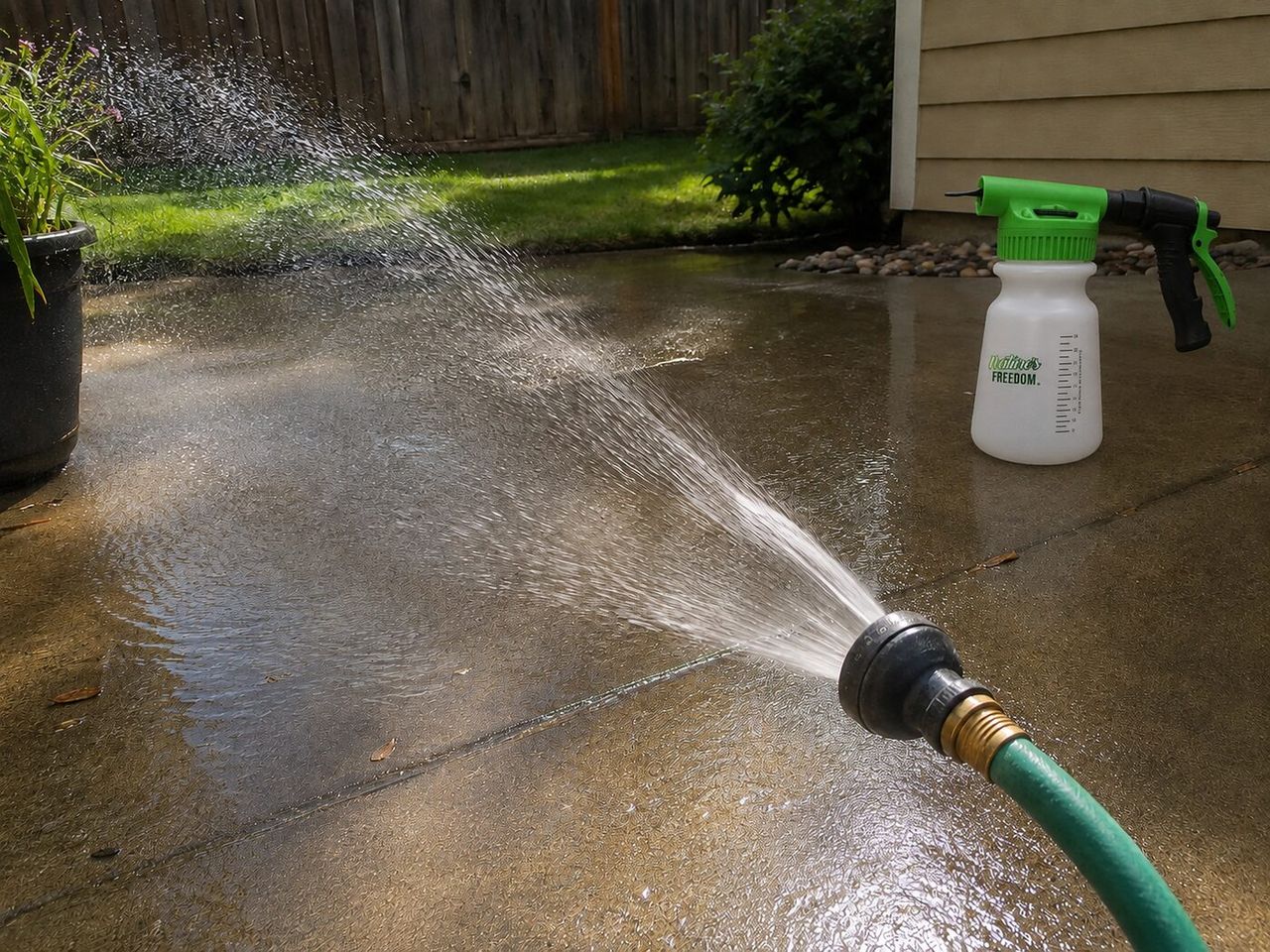
The water-drop test settles any argument: beads = sealed, soaks = porous.
The porous roster, with each one’s real playbook
Bare and weathered wood (decks, barn boards, doghouse interiors): scrub clean at the 4 oz/gal heavy-duty rate — cleaning still removes real microbial load — dry in sun, then sand and seal or paint. A sealed deck joins the claimable world permanently; a raw one never does.
Carpet and rugs: the honest worst case. Machine-washable rugs: hot wash, full dry. Wall-to-wall in a pet-illness scenario: hot-water extraction reduces load, but after parvo or ringworm the defensible options are professional remediation or replacement — and in animal rooms the long-term answer is no carpet. (The mud-room page is the domestic version of this doctrine.)
Fabric, bedding, plush toys, rope, webbing: these are laundry, and hot laundering with full drying is genuinely effective — it’s the porous world’s version of a protocol. ArkGuard carries no laundry claim, so we say it plainly: the washing machine is the disinfectant here.
Unsealed grout and cracked concrete: the porous seams inside otherwise perfect floors — grout and slab each have a sealing path that retires the problem for good.
Soil, grass, gravel, mulch: unmanageable by any chemistry — removal, sunlight, drying, time, and access control are the whole toolkit (the backyard map, and the parvo page’s hardest paragraph).
Designing porosity out
Facilities win this fight at the shopping stage: sealed floors, coved bases, stainless or plastic instead of wood, washable rubber instead of fabric mats, epoxy grout, no carpet anywhere an animal lives. Every porous material you don’t install is a protocol you never have to fake. What porous surfaces remain get honesty: clean them hard, dry them fast, launder what launders, replace what can’t — and save the label’s claims for the surfaces that can actually hold them.
Frequently asked
Can you disinfect a wood deck where a sick dog was?
Sealed or painted wood with an intact finish is a hard surface and takes the standard protocol. Bare or weathered wood is porous — clean it thoroughly, let sun and drying work, and consider sanding and sealing it; no product can claim disinfection of raw wood.
Is there any disinfectant that works on carpet?
No surface disinfectant carries disinfection claims for carpet — the microbiology lives down in the pile and pad where no wet contact time can be held. Hot-water extraction cleaning reduces load; true decontamination after serious disease often means replacement.
How do I know if a surface counts as porous?
Drop water on it. If it beads and sits, it's sealed and claimable; if it darkens and soaks in, it's porous. When in doubt, treat it as porous — over-trusting a surface is how outbreaks restart.