
Grooming Salon Disinfection: Tables, Tubs, Tools & Dryers
Last reviewed 2026-08-20
Grooming is the highest-touch business in pet care: every dog is handled for an hour, on shared surfaces, with shared steel. One ringworm case handled loosely can ride your shears for a week. Here’s the salon protocol, station by station.
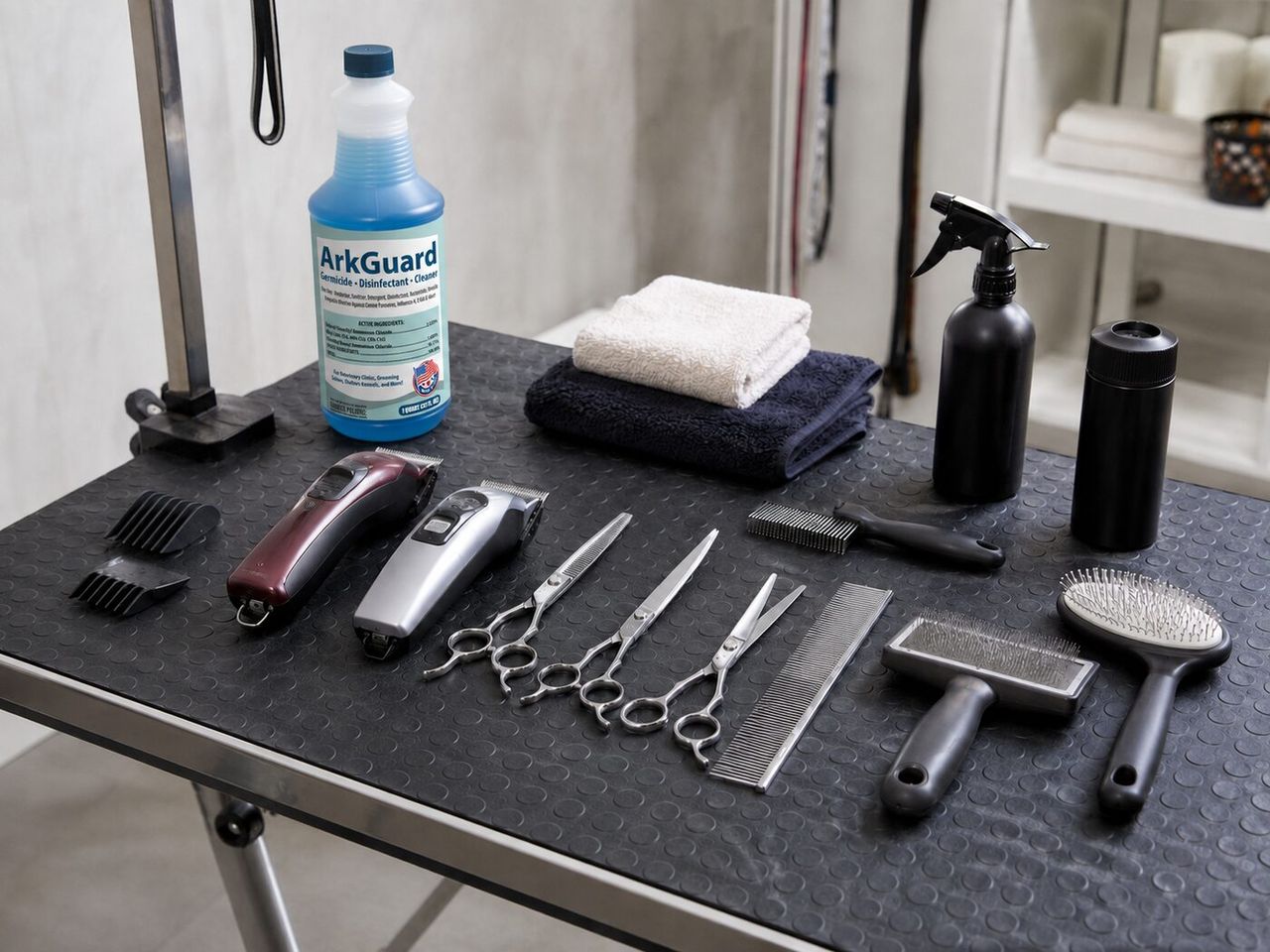
The grooming table: your exam room
Between every dog: table top, grooming arm and loop hardware, and your own spray-bottle trigger. A labeled 32 oz bottle of ArkGuard mix (½ oz per bottle — the 2 oz/gal rate via the funnel) makes this a 20-second habit: spray to visibly wet, work on paperwork or coat prep elsewhere for the dwell, wipe down. The grooming loop itself is fabric on most tables — swap and launder loops rather than pretending a spray disinfects webbing. (Porous = no surface claim. We keep that rule even when it’s inconvenient.)
Tools: the immersion the label wrote for you
The ArkGuard label explicitly covers salon implements: combs, clippers, plastic rollers, brushes, trimmers, razors, scissors, blades, tweezers and other salon tools — pre-cleaned, then immersed in 2 oz/gal solution for at least 10 minutes, rinsed thoroughly, and dried before use. Set up a covered soak pan behind the station: tools from the last dog go in, tools for the next dog come out of the rinsed-and-dry side. Two cheap pan sets create a rotation that never leaves you bare-handed.
Running clippers get the label’s spray treatment: 2 oz/gal mist onto the moving blade, held downward, never dripping into the clipper case. Blade wash solvents handle hair and oil; ArkGuard handles the microbiology; they are separate steps, never mixed.
Tubs, wands, and the drain
After each dog: hair out, rinse down. Between dogs with any skin condition — and at least daily regardless: tub walls and floor, faucet and sprayer handles at 2 oz/gal, visibly wet 10 minutes, then rinse the tub before the next bath. The drain cover and first stretch of pipe are the salon’s odor factory; weekly scrub with solution (the odor guide explains why this one spot matters more than the whole floor).
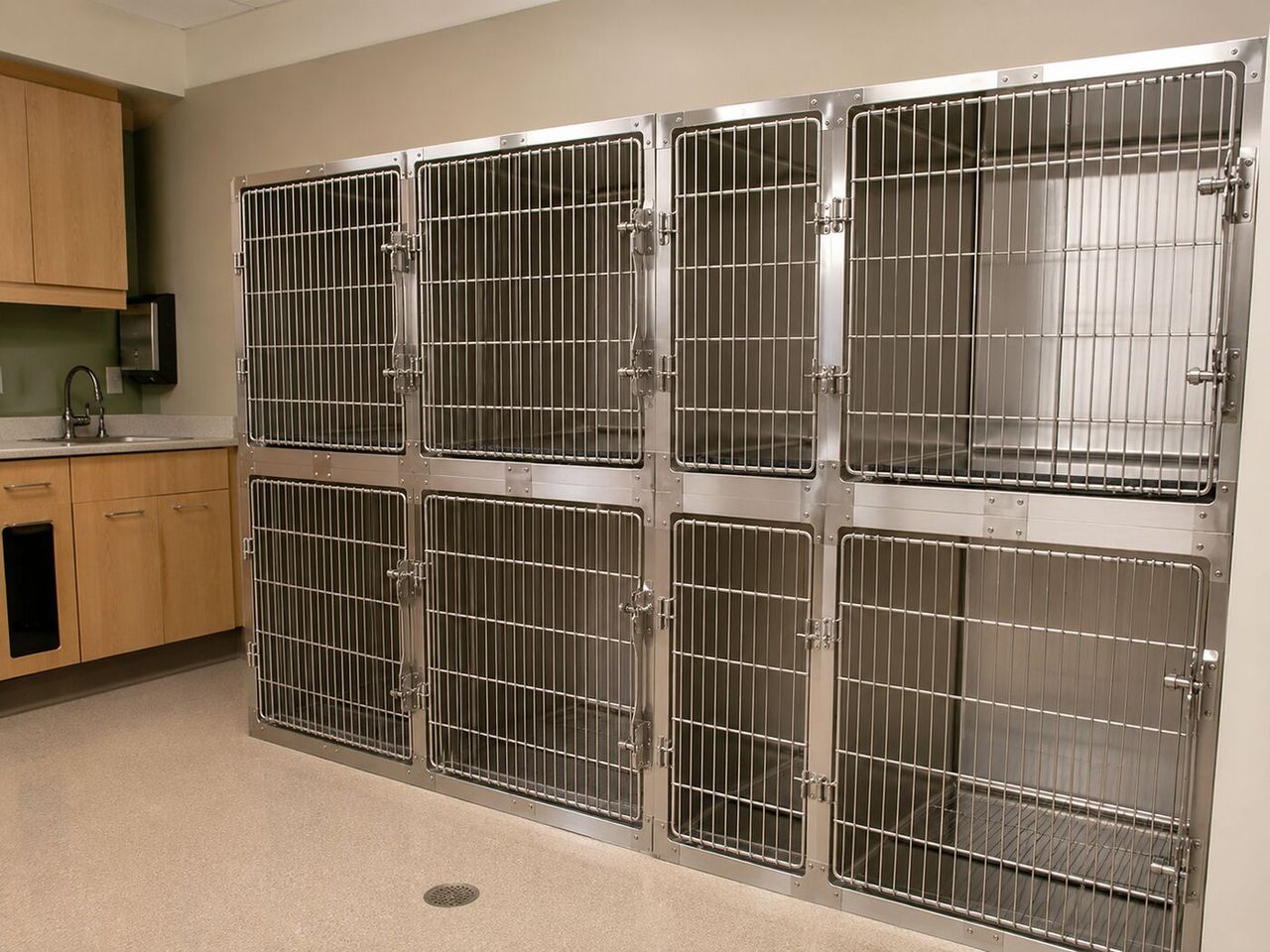
Cage banks, dryers, and the floor
Holding cages turn over like kennels: pre-clean, 2 oz/gal, 10 minutes wet, dry, fresh towel (laundered, not sprayed). Cage dryer doors and the dryer’s intake grill area get wiped to visibly wet daily — warm airflow plus dander is a microbe conveyor. Floors: sweep hair constantly, mop at 2 oz/gal at midday and close.
The ringworm playbook
Ringworm (Trichophyton) is the grooming industry’s recurring nightmare, and it’s on ArkGuard’s fungicidal label at the routine 2 oz/gal / 10-minute rate for hard surfaces. Suspect case? Finish the dog last if possible, then: tools to the soak, table and tub full protocol, cage stripped and treated, loops and towels hot-laundered, floor mopped. Spores survive on shed hair — the vacuum and dustpan get a wipe-down too. It’s thirty minutes of discipline against six weeks of spread.
Salon owners buying by the case: quart cases put a bottle at every station — partner pricing here.
Frequently asked
How do groomers disinfect shears and clipper blades between dogs?
Pre-cleaned combs, blades, shears and salon tools go into a 2 oz/gal ArkGuard immersion for at least 10 minutes, then get rinsed thoroughly and dried — that soak is directly on the label. Running clippers can be misted at 2 oz/gal, sprayed downward, never into the housing.
What kills ringworm in a grooming salon?
ArkGuard carries fungicidal claims including Trichophyton (the ringworm fungus) at 2 oz per gallon with a 10-minute wet contact time on hard, non-porous surfaces — tables, tubs, cage banks, tools. Fabric and porous items need hot laundering or disposal.
Do grooming tubs need disinfecting or just rinsing?
Both, on different schedules: rinse hair and product after every dog, disinfect the tub, faucet handles, and sprayer wand at 2 oz/gal between dogs with any skin condition and at least daily otherwise.