
How to Disinfect a Dog Crate (Home, Travel & After Illness)
Last reviewed 2026-08-20
The crate is your dog’s bedroom, your car’s cargo hold, and — at daycare, the groomer, and the vet — a shared hotel room. It deserves better than an occasional hose blast. Here’s the whole job, sized for home.
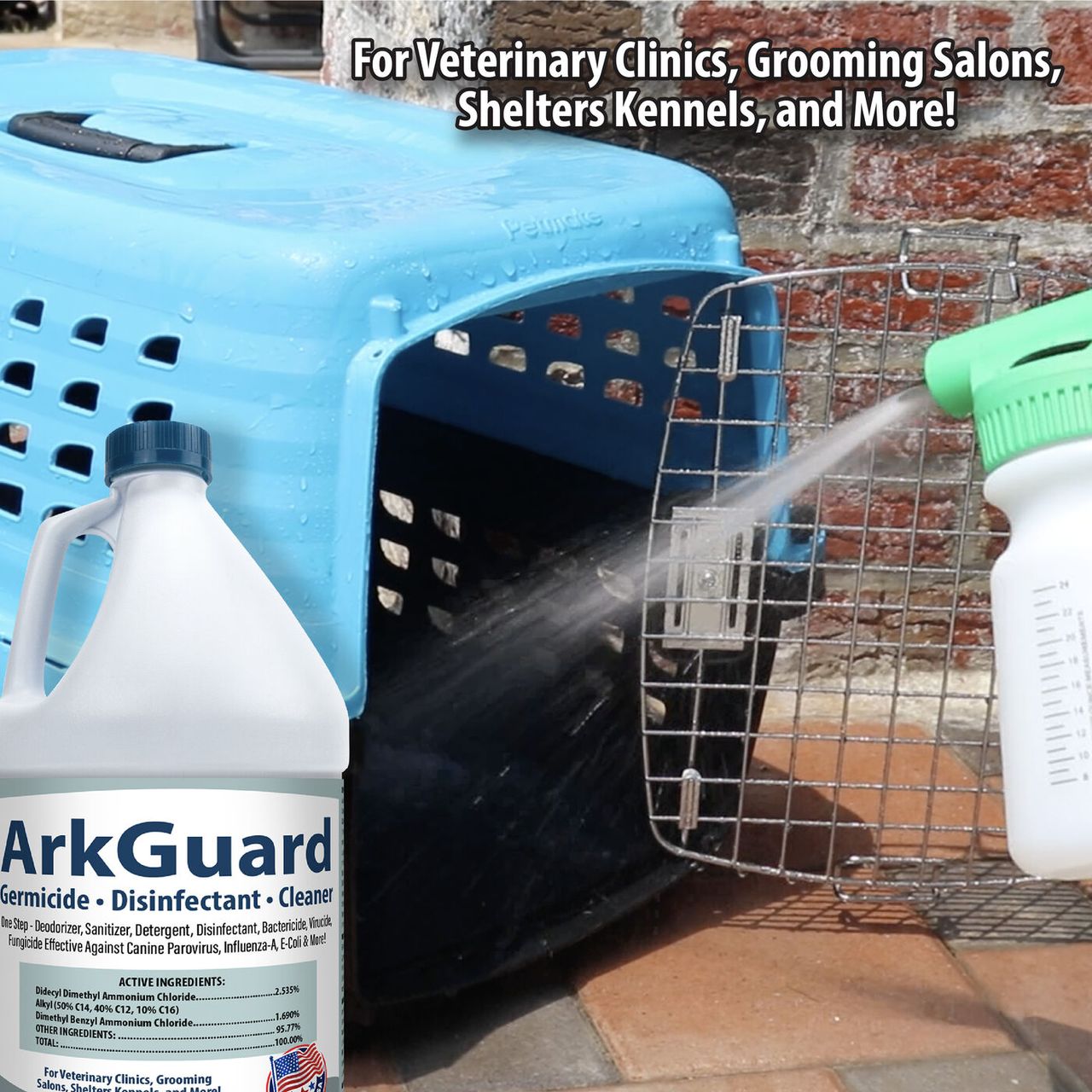
Routine refresh (weekly, healthy dog)
- Everything out: dog, bed, toys, bowls. Bedding into a hot wash.
- Shake or vacuum hair and crumbs; wipe up visible grime. (Soil first, always — disinfectant over dirt is wasted.)
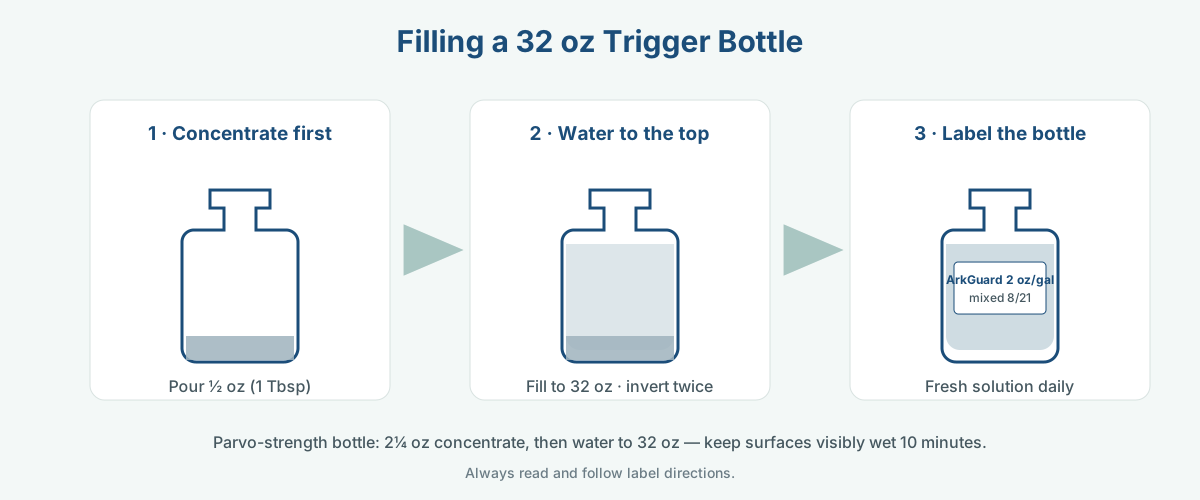
- Mix a 32 oz trigger bottle: ½ oz (1 tablespoon) of ArkGuard, fill with water — the label’s 2 oz/gal rate. The threaded funnel makes this a ten-second, no-spill pour.
- Spray tray, bars, door, latch, handle — everything hard — until visibly wet, and keep it wet 10 minutes. Outside on the driveway, use the mist to re-wet as needed.
- Air dry fully. Bowls get washed, disinfected, and rinsed with drinking water before use.
That’s it: fifteen minutes, most of it dwell time you spend doing something else.
After illness, or for secondhand gear
Vomiting, diarrhea, kennel cough in the house, a rescue foster, a marketplace crate of unknown history — upgrade the protocol:
- Deep-clean first at the heavy-duty rate (1 oz per 32 oz bottle).
- Then apply the parvo-strength mix — 2¼ oz per 32 oz bottle (9 oz/gal) — to every hard surface, visibly wet for the full 10 minutes. Parvovirus is the reason secondhand puppy gear has a reputation; the full protocol is here.
- Sun-dry. UV and dryness are free helpers.
- Soft items from a sick animal: hot-launder what’s washable, discard what isn’t. ArkGuard carries no fabric claim, and we won’t pretend otherwise.
Travel crates and the car
Plastic airline kennels: same routine, plus pop the top half off and treat the rim channel where liquids wick and hide. Metal hardware: wipe dry after the contact time to keep it happy. The car’s cargo bed liner (hard plastic or rubber): spray, dwell, dry — after every trip that involved a vet visit, a litter of anything, or a dog you don’t know.
The five-second rule for shared spaces
Any crate that hosts different animals — daycare, grooming, transport runs, foster rotations — should be disinfected between occupants, exactly like a kennel turnover. Between your own healthy dog’s naps? Weekly is plenty. Disinfection intensity should track how many immune systems share the surface.
Frequently asked
How often should I disinfect my dog's crate?
A weekly wash-and-disinfect works for a healthy single dog at home; disinfect immediately after any illness, after transporting unfamiliar animals, before lending or borrowing a crate, and always before a new puppy uses secondhand gear.
Can I disinfect the crate with the dog's bedding inside?
No. Remove the dog, bedding, toys and bowls first. Bedding gets hot-laundered separately — surface disinfectants are for the hard crate, not fabric.
What about a used crate I bought secondhand?
Treat it as contaminated: full heavy-duty clean, then the 9 oz per gallon parvovirus protocol with a 10-minute wet contact time, dried in the sun before your dog touches it. A ten-dollar mix session is cheap insurance on a used crate.