Kennel Odor: Find It, Kill It, Keep It Gone
Last reviewed 2026-08-20
Every boarding customer judges your facility with their nose in the first four seconds. Here’s how to win those four seconds with chemistry instead of cover-up.
Where the smell actually comes from
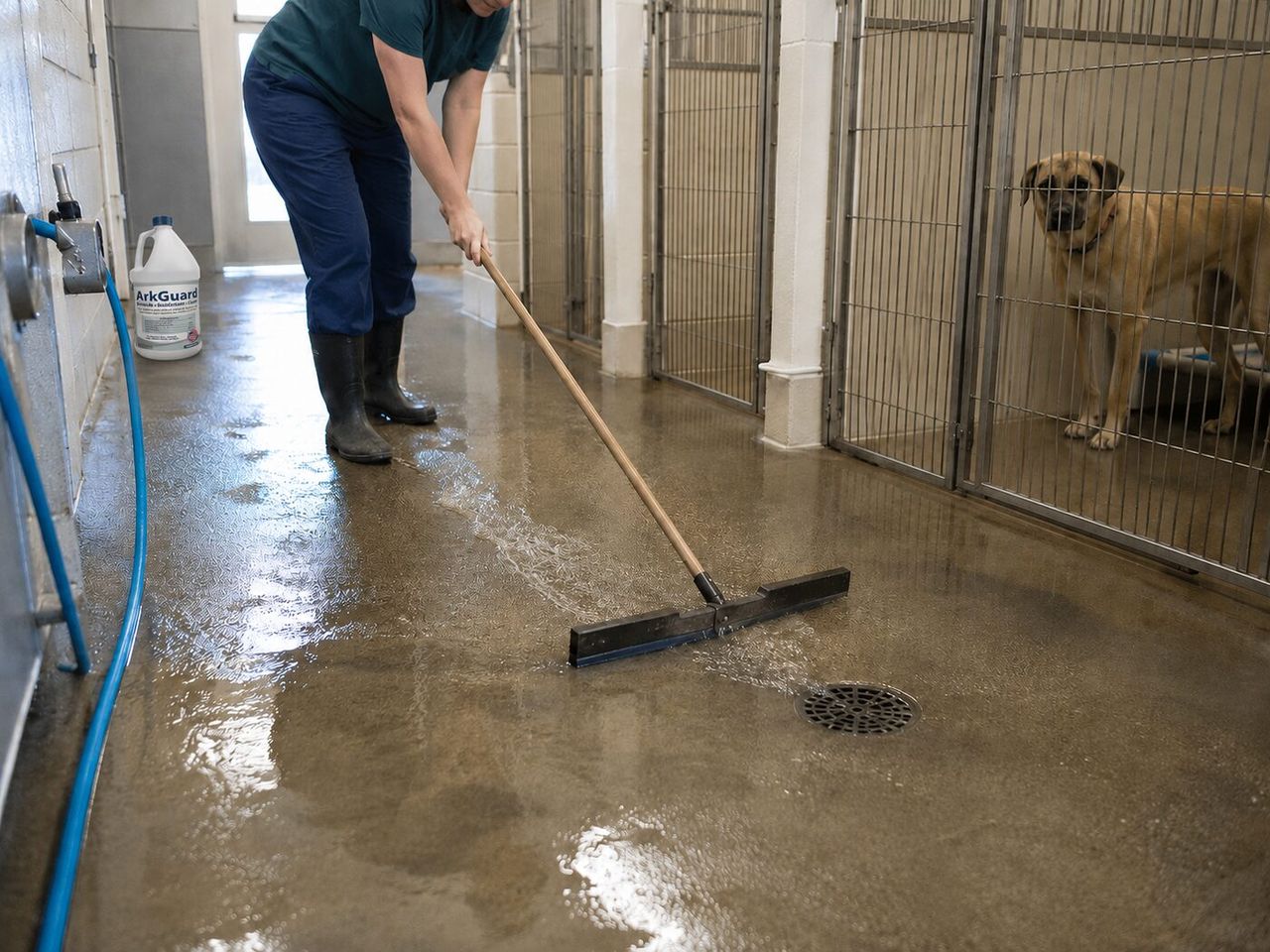
Kennel odor is bacterial exhaust: microbes digesting urine films, anal-gland residue, food grease, and skin oils on your surfaces. Perfume sprays add a smell; they don’t subtract one. The subtraction move is a deodorizing disinfectant — ArkGuard cleans away the feedstock and kills the producers in the same 2 oz/gal pass you already do for disease control. One product, one pass, two wins.
The five hiding places
When a facility “cleans constantly but still smells,” the odor is living somewhere the mop doesn’t go. In order of likelihood:
- Drains. The cover, the basket, and the first foot of pipe grow a biofilm that outgases around the clock. Weekly: pull, empty, scrub with 2 oz/gal solution.
- Mat and platform undersides. Moisture wicks under, never dries, ferments. Flip and treat both faces at turnover.
- Grout lines and wall-floor joints. Porous mortar holds residue; scrub these seams during the weekly deep clean and consider sealing them.
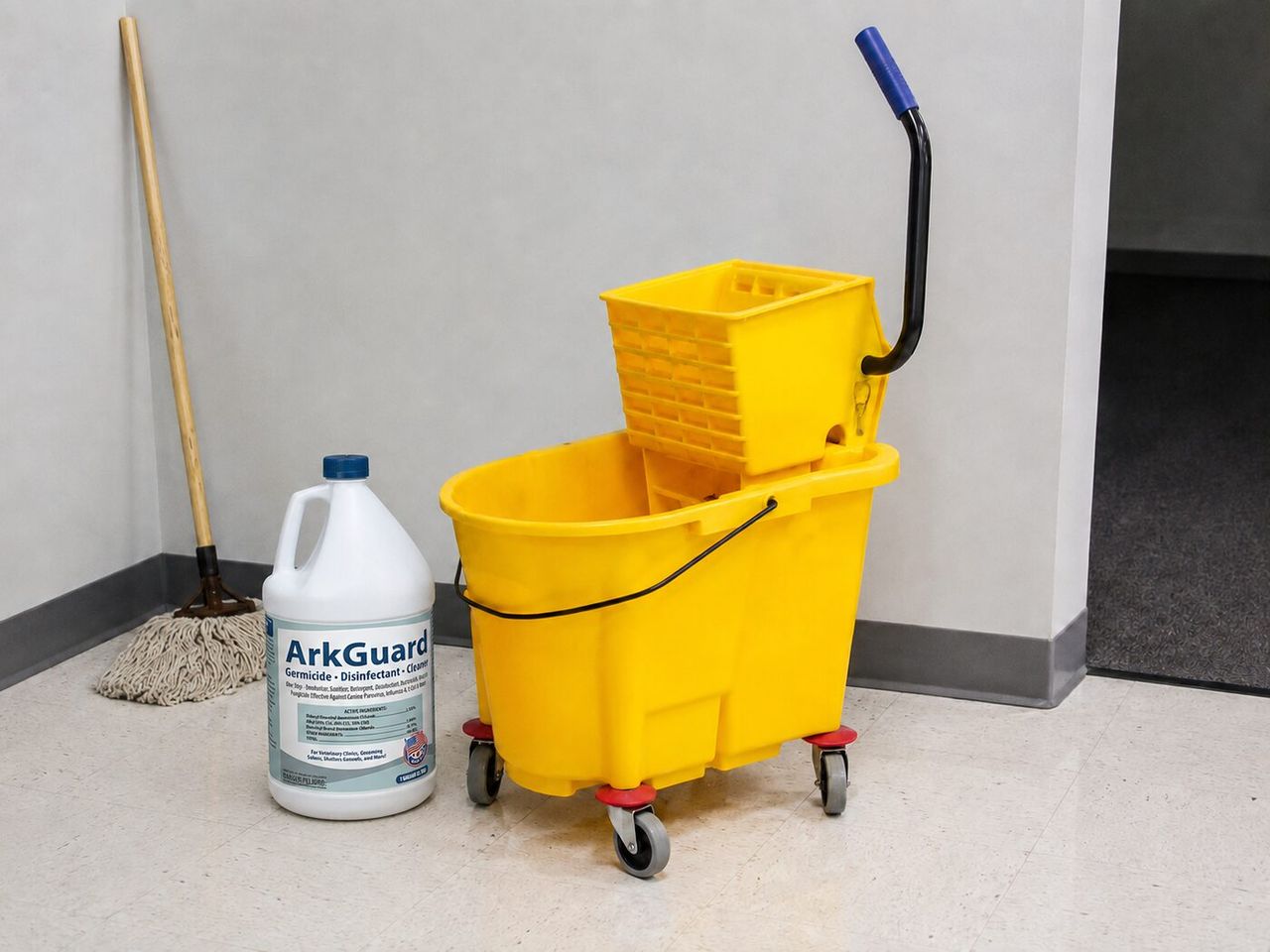
- The tools. Sour mop heads, squeegee blades, and scrub brushes reapply odor bacteria to every surface they touch. Launder heads hot; soak tools in 2 oz/gal solution weekly.
- Fabric and porous gear. Bedding, plush toys, unsealed wood platforms. Launder, replace, or seal — no surface product fixes a porous reservoir.
The elimination plan
Day one — knock it down. Full facility pass: solids out, heavy-duty clean at 4 oz/gal where grime is visible, then disinfect everything at 2 oz/gal, visibly wet 10 minutes: floors, lower walls, bars, doors, thresholds. Hit all five hiding places above the same day, or the survivors re-seed the clean surfaces.
Daily — hold the line. The daily kennel routine keeps residue from accumulating; odor control is a byproduct of a disease-control schedule done on time.
Weekly — the reservoirs. Drains, tools, undersides. Fifteen minutes that decide whether the building smells like a facility or a fresh one.
Outdoors and problem materials
Sealed concrete and composite decking respond fully to the program above — apply with the hose-end sprayer for speed. Unsealed concrete, gravel, and soil are porous: urine sits below reach, and honest advice is removal, rinse-downs, sunlight, and sealing the concrete once it’s clean and dry. Artificial turf drains well and takes the hose-end pass nicely — spray, dwell, rinse per the turf maker’s guidance.
Smell is data. A kennel that stays odor-free on this program is, almost by definition, one whose disinfection program is actually reaching its surfaces — which is the real point.
Frequently asked
What kills dog kennel odor permanently?
Removing the organic residue and killing the bacteria that produce the smell — a cleaning-plus-disinfection pass on every hard surface, plus treating the hidden reservoirs: drains, mat undersides, grout lines, squeegees, and mop heads. Masking sprays only delay the smell.
Why does my kennel smell worse in summer?
Bacterial metabolism speeds up with heat and humidity, so the same residue produces more odor compounds faster. Summer is when marginal cleaning programs get exposed.
Does ArkGuard remove urine smell on concrete?
On sealed concrete, yes — clean and disinfect, and the odor source is removed. On unsealed concrete, urine soaks below the surface where no topical product can reach; deep-set odor there calls for sealing the floor after a thorough clean.