Animal Shelter Disinfection: Intake, Housing, Iso & Adoption Floors
Last reviewed 2026-08-20
Shelters run the hardest version of this job: unknown vaccine histories, maximum stress (stress suppresses immunity), rotating volunteers, and a budget. The program below is built for exactly that — three numbers, cheap concentrate, and honesty about what disinfection can’t fix.
Intake: the front line
Every animal is infectious until proven boring. The intake room turns over between every animal: exam surface, scale, carrier-staging counter, floor spot — 2 oz/gal, visibly wet, 10 minutes. Carriers and traps get the crate protocol before they go back in the truck. A wall-mounted dilution chart and pre-labeled bottles mean the 5 p.m. volunteer does exactly what the 9 a.m. tech did.
Daily housing rounds
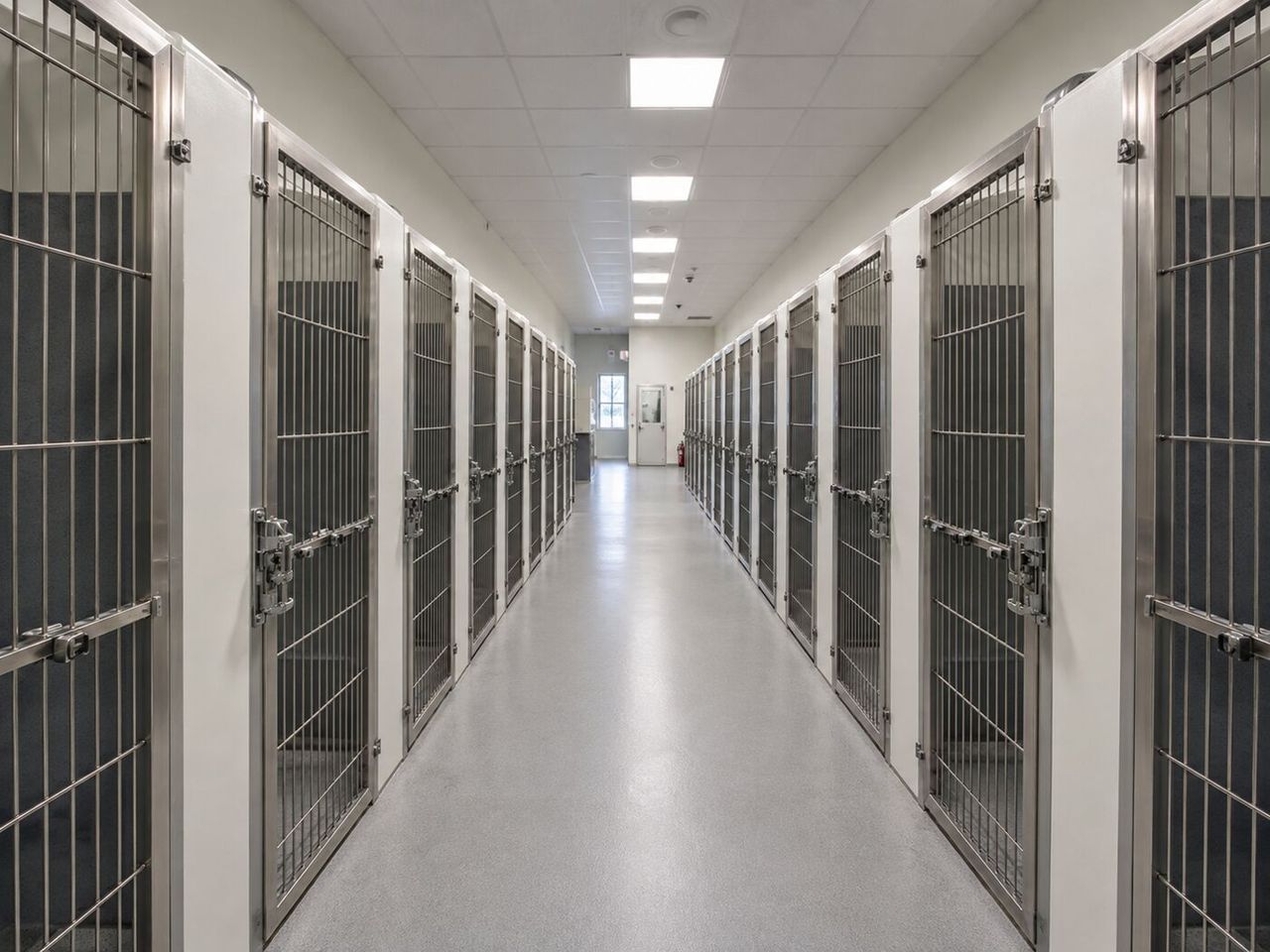
Dog runs and cat condos follow the kennel routine: animals out, solids out, wash at 2 oz/gal, 10 wet minutes, dry, return. Two shelter-specific upgrades:
- Spot-clean occupied cat housing, deep-clean at move-out. Pulling a resident cat out for daily full disinfection spreads more disease (via stress and handling) than spot-cleaning prevents — clean visibly soiled spots and swap bedding, then do the full 10-minute protocol the day the condo turns over.
- Sequence rooms healthy → sick, never backward. Adoption floor first, then holding, then iso, then burn the gloves (figuratively). Tools travel in the same one-way direction or don’t travel at all.
Isolation and outbreak mode
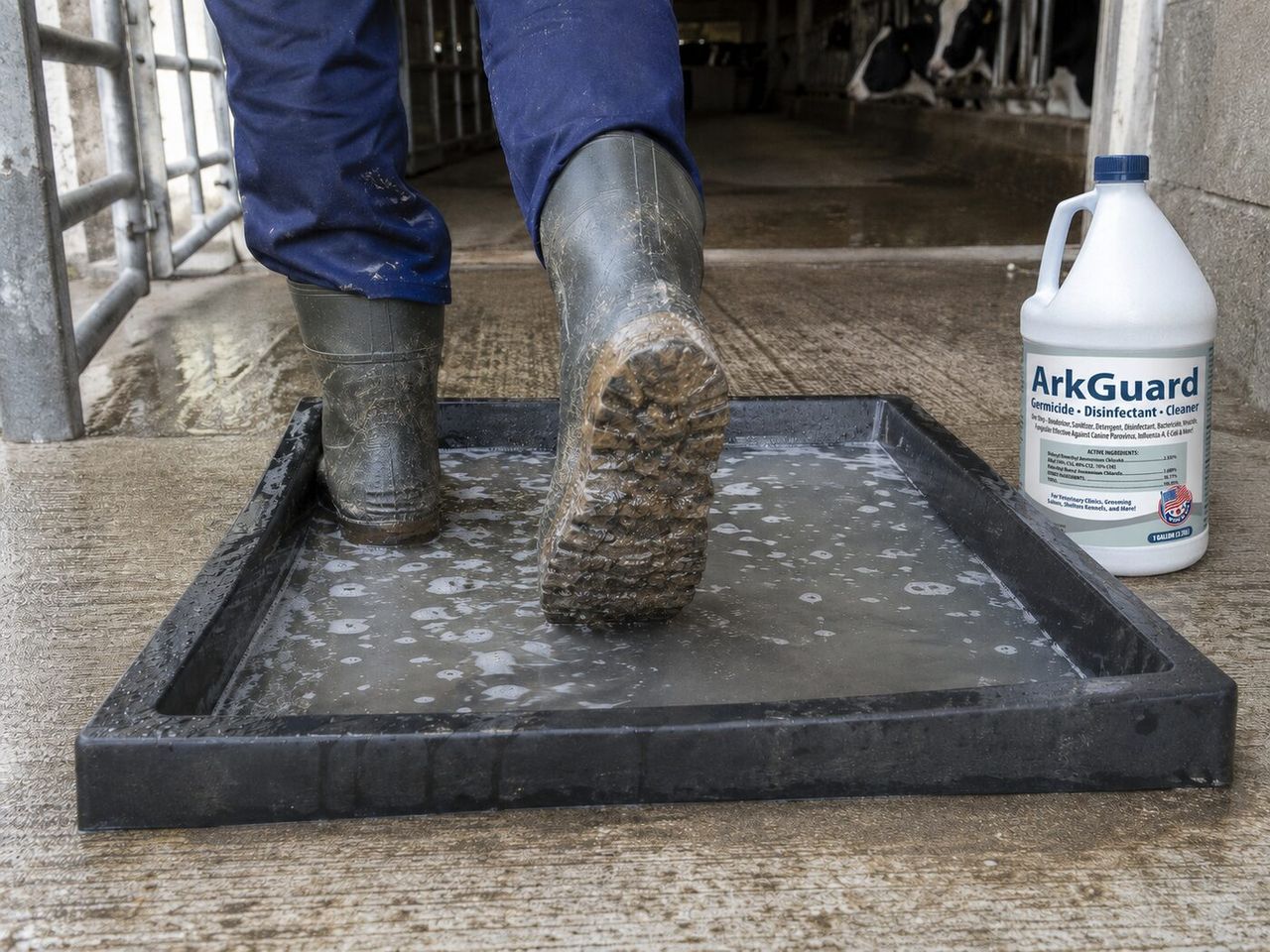
Iso rooms get disinfection between every entry, dedicated everything, and foot baths (2–4 oz/gal, one inch, remade daily) at each threshold. For confirmed parvo or feline panleukopenia in a wing: freeze movement, then run the 9 oz/gal protocol across every hard surface the cases touched — runs, corridors, door hardware, cart wheels, the works — on your veterinarian’s schedule until cleared. Feline calicivirus and panleuk surfaces respond to the labeled rates; what doesn’t respond is dirt play-yards, and no product fixes that — restrict, scoop, sunlight, time.
Adoption floor and events
The public touches everything, then touches the next kennel. Daily: kennel fronts and latches, meet-and-greet room after each visit, lobby floors. Off-site adoption events: bring pre-mixed labeled bottles and paper towels; disinfect pens at setup and teardown, spot-treat accidents immediately. It’s marketing too — adopters notice a shelter that visibly cares for surfaces.
Why concentrate math matters most here
A shelter’s disinfectant budget is measured in mop buckets per year. At 2 oz/gal, one ArkGuard gallon yields up to 64 gallons of solution and a partner-program case yields up to 256 — which turns “we can’t afford to disinfect the adoption floor daily” into a solved problem. Rescues and shelters qualify for case pricing; apply and tell us who you are.
Frequently asked
What dilution should a shelter use daily?
2 oz per gallon for routine housing, floors, and common areas, kept visibly wet 10 minutes after pre-cleaning. The 9 oz per gallon tier is reserved for parvovirus and rabies-virus protocols in affected areas.
How do shelters handle parvo outbreaks?
Stop movement through the affected wing, remove and pre-clean, apply 9 oz/gal to every hard surface with a 10-minute wet contact time, foot baths at every threshold, dedicated tools per room, and repeat per your veterinarian's outbreak plan. Porous outdoor ground cannot be disinfected — restrict access and let time and sun work.
What's the simplest way to keep volunteers compliant?
Pre-mixed labeled bottles, a one-page wall chart with three numbers (2 routine, 4 heavy grime, 9 parvo), and contact-time timers. Complexity is the enemy of shelter sanitation.