The Mud Room: Your Home's Biosecurity Checkpoint
Last reviewed 2026-08-20
Every germ your dog meets at the park commutes home through one room. The mud room (or entry hall, or “the three feet inside the back door”) is where a pet household can act like a smart kennel — a checkpoint, not a hallway.
The checkpoint layout
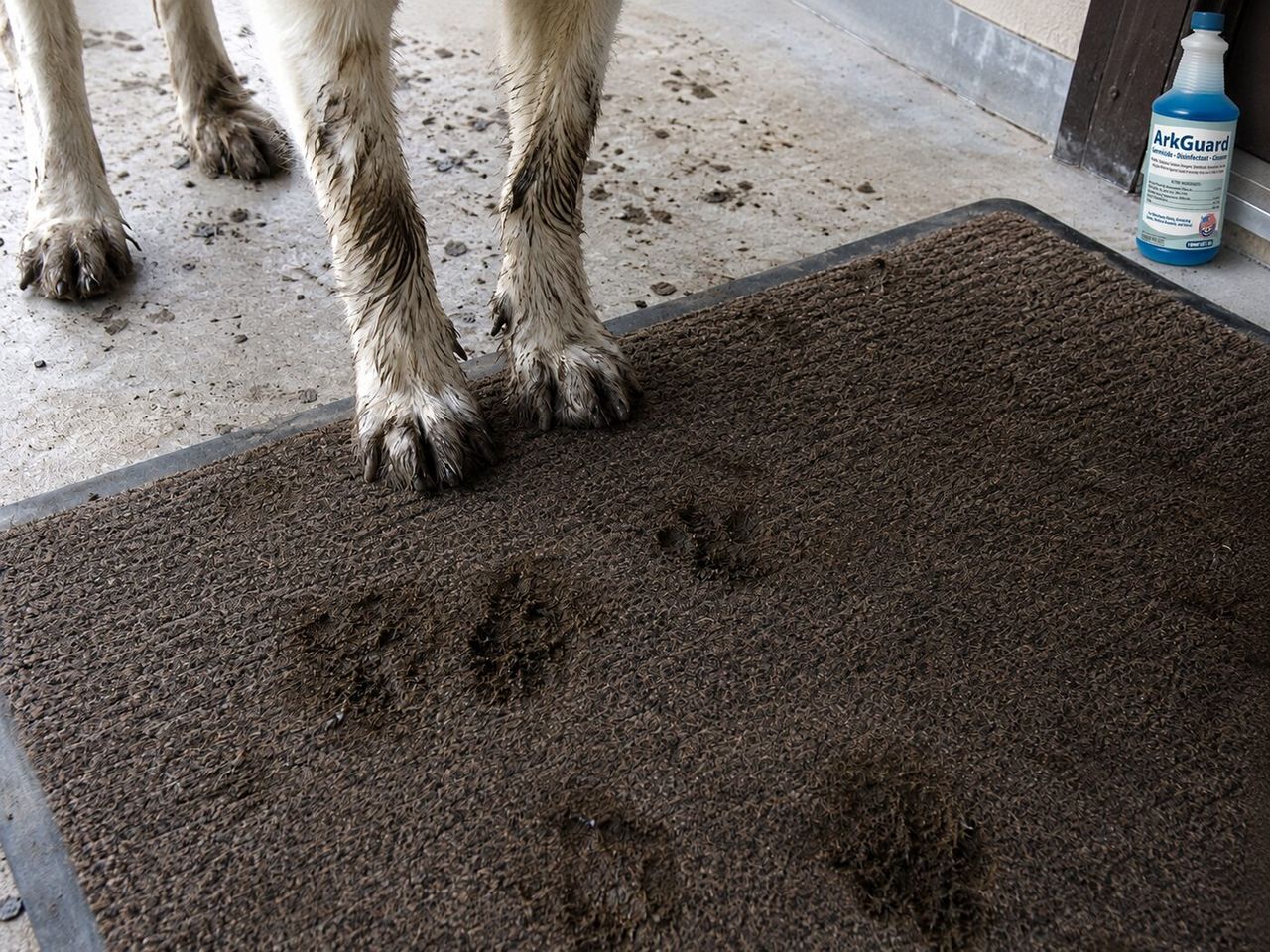
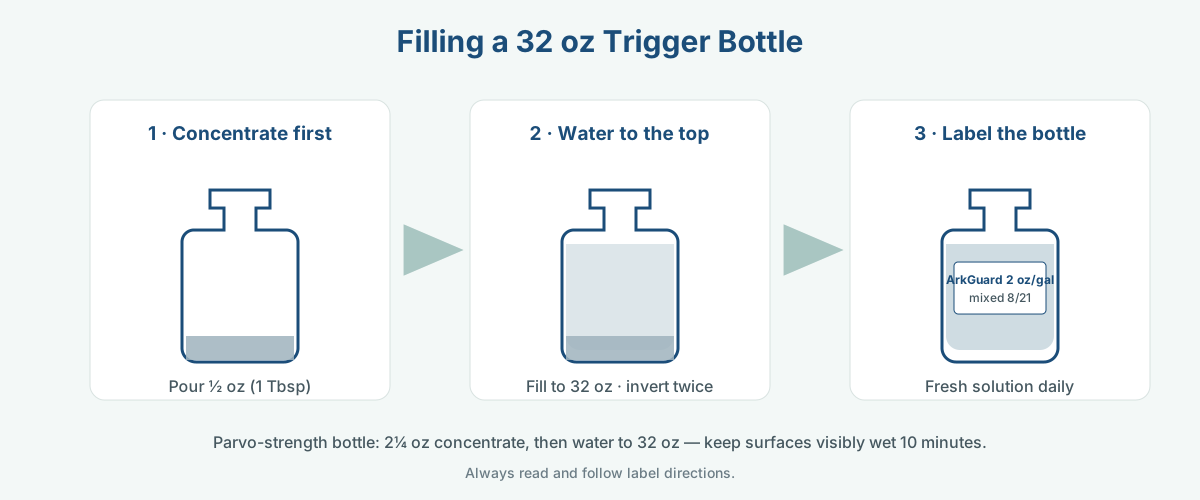
The working setup costs almost nothing: a hard-surface washable mat (rubber, not fabric) at the threshold, a boot tray, a towel hook and paw-wipe station, the leash-and-collar hooks, and — in a cabinet — a labeled 32 oz ArkGuard bottle (½ oz per bottle, the 2 oz/gal rate) with paper towels. Everything in the zone is chosen to be wipeable: sealed floor, washable mat, painted trim.
The weekly pass (10 minutes)
Mat up, floor swept, then spray the floor, mat, boot tray, and lower door to visibly wet — keep wet 10 minutes — and air dry. Wipe the leash hooks and door lever; they’re touched by the same hand that just bagged something. Hard rubber mats get flipped and both faces treated; fabric runners go in the wash. Done weekly, the entry never develops that faint wet-dog-vinegar note that means bacteria have set up shop (odor is bacteria).
The high-alert pass
Trigger it after: a dog-park day, a daycare or boarding pickup, a vet visit, a foster or visitor dog, or any GI incident. Same routine, plus the car cargo area (that protocol here) and the crate if it traveled. New-puppy households in the pre-vaccine window should run the entry at high alert continuously — shoes off at the door, because parvovirus rides shoe soles, and sidewalk history is invisible.
Gear on the hooks
Leashes and collars are mostly fabric — machine-wash nylon, wipe leather with leather-safe products; the disinfectant’s job is the hooks and shelf they hang on. Hard gear — crates in transit, travel bowls, the poop-bag dispenser shell — takes the standard spray-dwell-dry. Travel bowls, like all food gear, get the potable rinse after disinfection.
Paws, honestly
No disinfectant belongs on an animal, ours included — ArkGuard treats the floor, never the dog. Paw care at the checkpoint is mechanical: water or pet wipes, towel, done. If a vet ever prescribes an antiseptic paw soak, that’s medicine, not housekeeping, and it comes from them.
One quart of concentrate runs a two-dog household’s checkpoint for a year — the quart plus the funnel is the whole home setup.
Frequently asked
How often should a pet household disinfect the mud room?
Weekly for the routine floor-and-hardware pass, immediately after any accident, and same-day after visits to high-dog-traffic places — dog parks, daycare, the vet — or when any pet in the house is sick.
Can I disinfect the door mat?
Only hard rubber or plastic mats — scrub with 2 oz/gal solution, keep wet 10 minutes, rinse and dry. Fabric and coir mats are porous: launder the washable ones and replace the rest. No spray disinfects fabric, whatever the bottle says.
What about my dog's paws?
ArkGuard is a surface disinfectant — never applied to animals. Paws get plain water or pet-safe wipes and a towel at the door; the disinfectant handles the floor the paws walked on.