
Backyard Dog Runs: What You Can Disinfect — and What You Can Only Manage
Last reviewed 2026-08-20
The backyard run is where disinfectant marketing goes to exaggerate. Half the surfaces out there take a disinfectant beautifully; the other half physically can’t, and any brand that implies otherwise is selling you a feeling. Here’s the honest map.
The disinfectable half
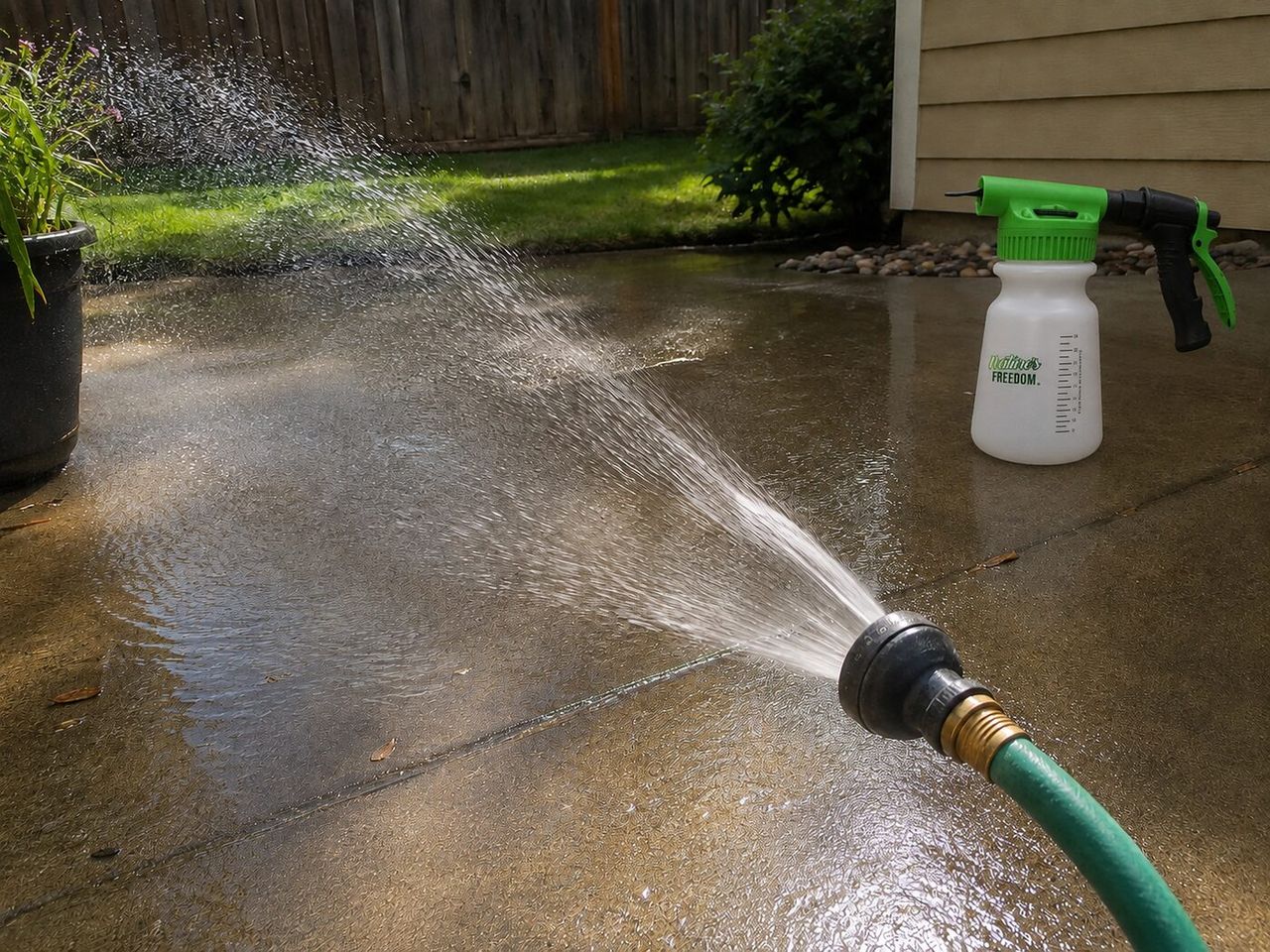
Concrete pads (sealed): the gold standard — run the kennel protocol with the hose-end sprayer on dial B: scoop, rinse solids off, spray to visibly wet, 10 minutes, rinse toward the drain or let dry. Unsealed pads: seal them and join this paragraph.
Artificial turf: takes a real protocol — weekly ArkGuard pass, monthly deep rinse — detailed in the turf guide.
Chain link, gates, and fence hardware: metal is non-porous; spray the lower three feet (the height dogs mark, mouth, and rub), latches, and gate frames during the weekly pass.
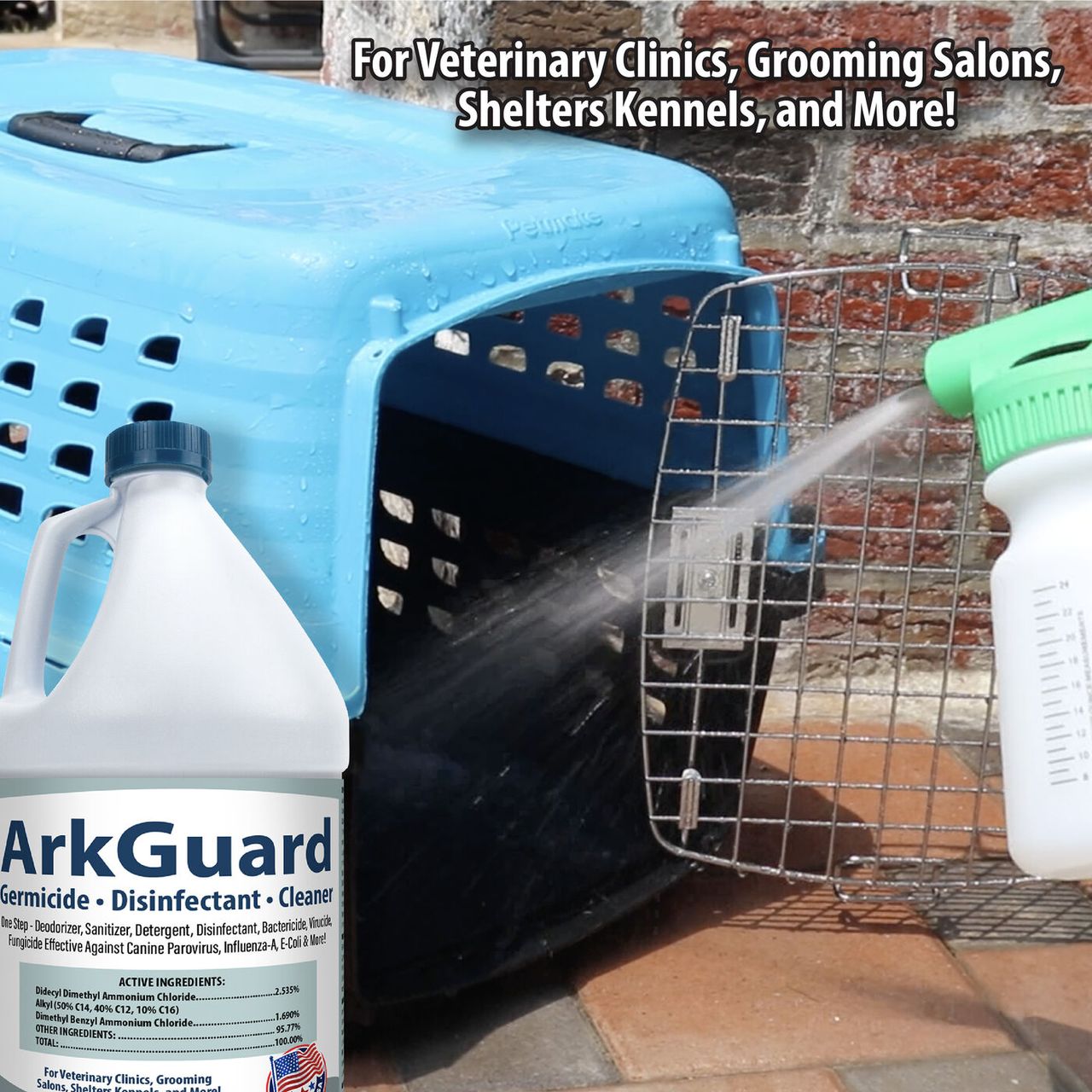
Plastic dog houses, water stations, and hard toys left out: the crate and toy rules apply — spray, dwell, dry, and potable-rinse anything that holds water for drinking. A dog house drying open in the sun gets UV as a free second pass.
Wood decks: only if sealed/painted — the porous-surface rule decides.
The unmanageable-by-chemistry half
Grass, dirt, gravel, mulch. A disinfectant claim requires a hard surface holding a visible wet film for a measured time. Soil drinks the film instantly; gravel is a colander; mulch is a sponge. This isn’t an ArkGuard limitation — it’s physics, and it applies to every product on the shelf, including the ones that don’t mention it.
Ground that hosted a sick dog — especially parvo, which persists in soil for months to a year-plus — is managed, not disinfected: pick up all waste immediately, hose solids away, maximize sun exposure (UV is the only free virucide), restrict vulnerable dogs from the area, and ask your veterinarian how long the quarantine should run. Breeders and rescues: this is the argument for pouring that concrete pad — it converts an unmanageable surface into a five-minute protocol.
The weekly backyard pass
Scoop daily (always — everything else fails if waste sits). Weekly: hard surfaces sprayed at 2 oz/gal with the hose-end, water station dumped-scrubbed-disinfected-rinsed-refilled, fence hardware wiped, dog house checked. After illness or before a new puppy: the full high-alert version, plus honest quarantine of the soft ground.
The gallon + hose-end kit is built for exactly this job — one fill covers about nine gallons of applied solution, which is most backyards twice over.
Frequently asked
Can I disinfect grass or dirt where a sick dog was?
No — no surface disinfectant can hold a measured wet contact time in soil or turfgrass, so claims don't apply there. Contaminated ground is managed: remove waste, restrict access, let sun and drying work, and ask your vet how long to keep vulnerable dogs off it.
What's the best surface for a disinfectable dog run?
Sealed or epoxy-coated concrete with a slight slope to a drain — it takes the full 2 oz/gal (or 9 oz/gal parvo) protocol. Quality artificial turf over a draining base is second best, with its own protocol.
How do I disinfect a plastic dog house?
Like a big crate: empty it, pre-clean, spray every interior and exterior hard surface to visibly wet at 2 oz/gal, keep wet 10 minutes, and let it air dry in the sun before bedding returns.