
Cars, Vans & Transport Vehicles: Disinfecting the Rolling Kennel
Last reviewed 2026-08-20
Every dog vehicle is a kennel with a motor — shared by animals whose only common trait is that none of them were consulted about hygiene. Rescue transporters know this; family SUVs learn it the hard way, usually via one carsick puppy. The protocol, from daily to outbreak grade.
Set the vehicle up to be cleanable
The one upgrade that changes everything: a hard, washable cargo liner (molded plastic or heavy rubber) over the carpet, plus hard crate(s) rather than loose dogs. Porous car carpet can’t be disinfected — a $60 liner converts the whole cargo bay into a surface the label actually covers. Seat protectors that unzip and machine-wash handle the soft zones.
The routine pass (after park days, daycare runs, group events)
- Crate and liner out of the vehicle.
- Hair and grit vacuumed or brushed off; visible soil cleaned.
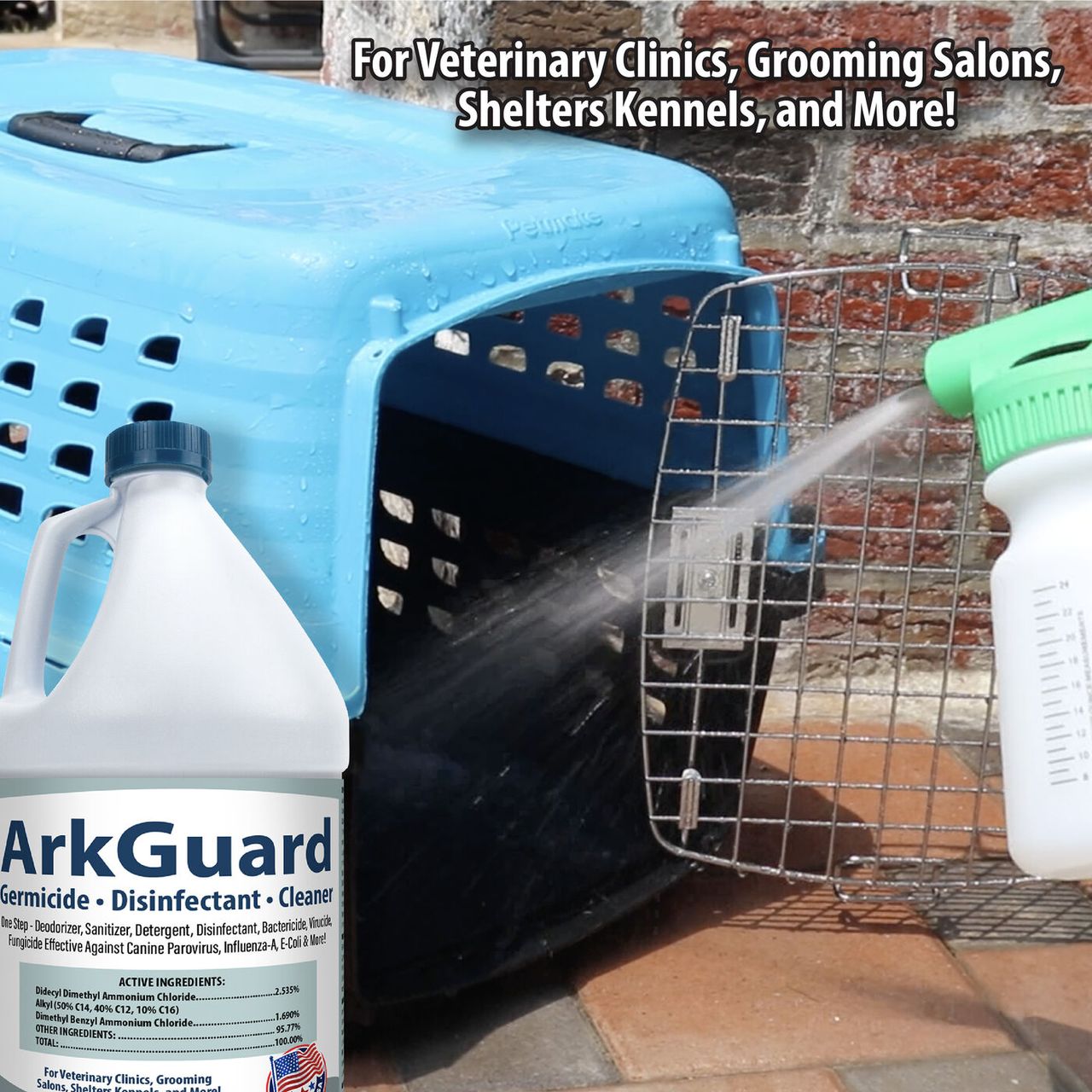
- Spray liner, crate, and any hard interior panels the dog contacted with 2 oz/gal solution — funnel-filled bottle or pump sprayer — to visibly wet, 10 minutes.
- Air dry in the sun, doors open. Water bowls and travel bottles: wash, disinfect, potable rinse.
Ten minutes of dwell time is exactly one cup of coffee; the sun does the drying.
The high-alert pass (sick animal, unknown-history rescue, parvo exposure)
Everything above, escalated: the crate gets the full crate protocol; hard surfaces get the 9 oz/gal parvo tier, 10 minutes wet if parvo is in the picture (protocol); soft items that touched the animal — blankets, seat covers — go straight into a bag, then a hot wash or the trash. Then the parts people forget: door handles and latch buttons, the hatch release, seatbelt buckles used to secure the crate, and the driver’s steering wheel — your hands closed the loop, so the wipe does too.
Rescue and transport operations
Multi-leg transports should treat every leg like a kennel turnover: crates disinfected between passengers, van floor and lower walls at 2 oz/gal between runs, a foot-bath mat or boot spray habit at the home base, and a written log (leg, date, protocol) — receiving rescues increasingly ask for exactly that paperwork. A quart bottle and a labeled sprayer live in the van permanently; the quart case exists so every vehicle in a transport network carries its own.
One honest note for hot climates: solution that flash-dries on sun-baked liners hasn’t met its contact time — do the disinfection pass in shade or evening, or re-wet (why wet time matters).
Frequently asked
How do I disinfect my car after transporting a sick dog?
Remove and treat the crate separately, pull the cargo liner and hard mats out, clean visible soil, then apply 2 oz/gal solution (9 oz/gal after a parvo case) to all hard surfaces, keep them visibly wet 10 minutes, and air out with doors open until fully dry.
Can car carpet and seats be disinfected?
No — carpet and upholstery are porous, so surface disinfection claims don't apply. Use washable hard liners over the soft surfaces, launder removable covers, and treat what's underneath. That's why hard cargo liners are the single best purchase for dog transport.
What should rescue transports do between runs?
Between every run: crates out and fully disinfected, van floor and walls at 2 oz/gal (10 minutes wet), water gear rinsed potable, and the driver's touch points wiped. Unknown-history animals make every leg a turnover.