
The Litter Box Zone: Boxes, Scoops, Mats & the Wall Nobody Treats
Last reviewed 2026-08-20
The litter station is the highest-biology square meter in a cat home, and it punishes both kinds of neglect: skip cleaning and it becomes an odor factory; clean it with the wrong thing (or rinse it badly) and the cat fires the box entirely. Here’s the protocol that satisfies both the microbiology and the cat.
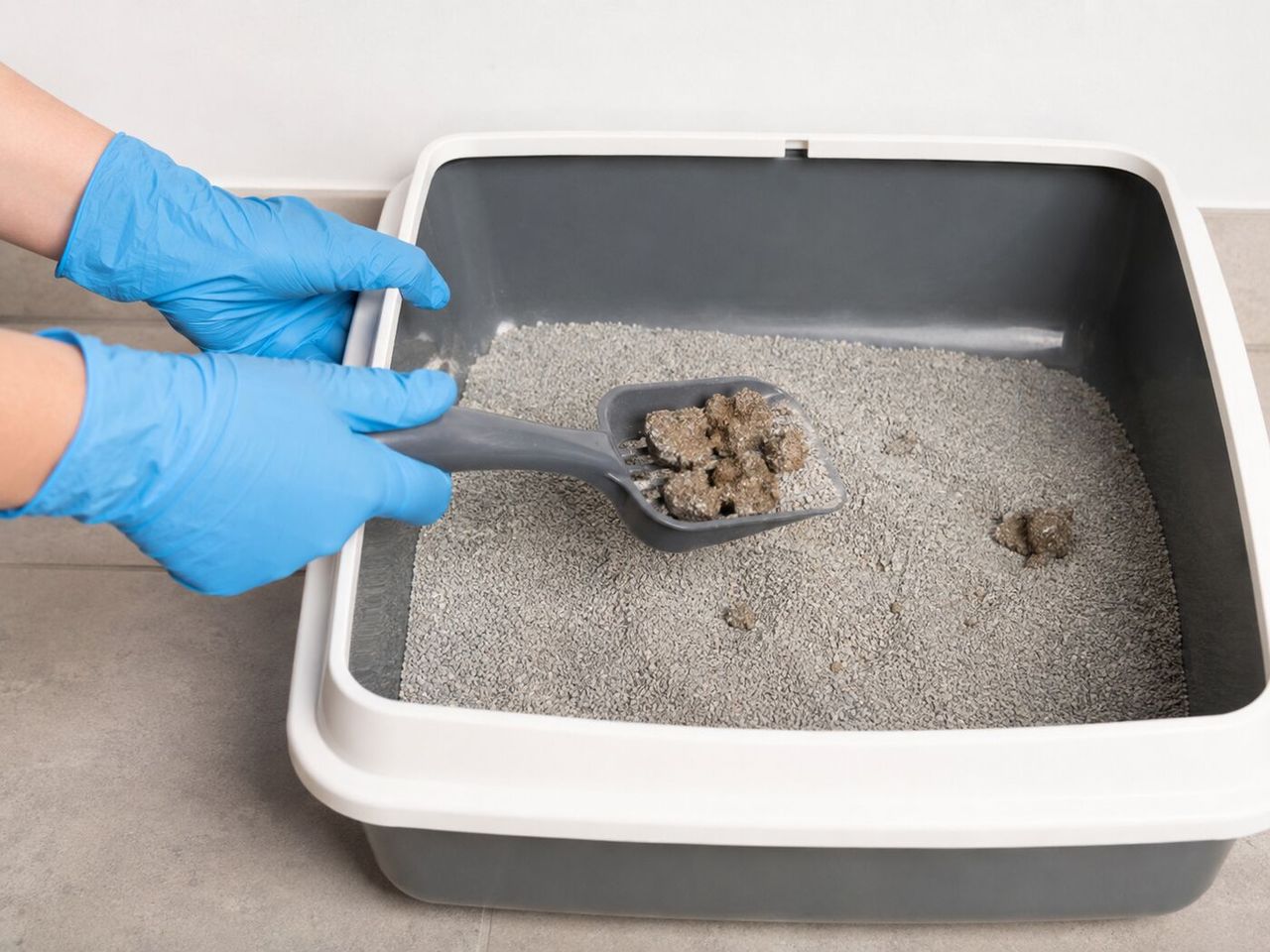
The weekly box protocol
- Dump litter into a bag; knock loose the stuck bits.
- Scrub the box — bottom, corners, rim, and lid if hooded — with 2 oz/gal ArkGuard solution.
- Visibly wet 10 minutes. Do the scoop, mat, and wall (below) during the dwell.
- Rinse thoroughly and dry. This step is doubled in importance for cats: residue smells are box-rejection fuel, and a dry box is the label’s rule before animal contact anyway.
- Refill with fresh litter.
Plastic boxes eventually score and etch — scratched plastic holds soil and smell below scrub depth, so replace boxes yearly-ish. (Etched plastic is halfway to being a porous surface, and you know our rule on those.)
The supporting cast
The scoop lives in the biology full-time and gets the same weekly scrub-dwell-rinse — plus a quick rinse after daily use. The mat: hard rubber mats take the full protocol; fabric “litter-trapping” mats are laundry items, not spray targets. The floor beneath gets sprayed and mopped weekly — tracked litter grinds soil into the surface. And the wall behind the box: standing male cats and enthusiastic diggers create a urine aerosol zone to about 18 inches — wipe it weekly and the mystery ammonia note in the room disappears (odor is bacteria).
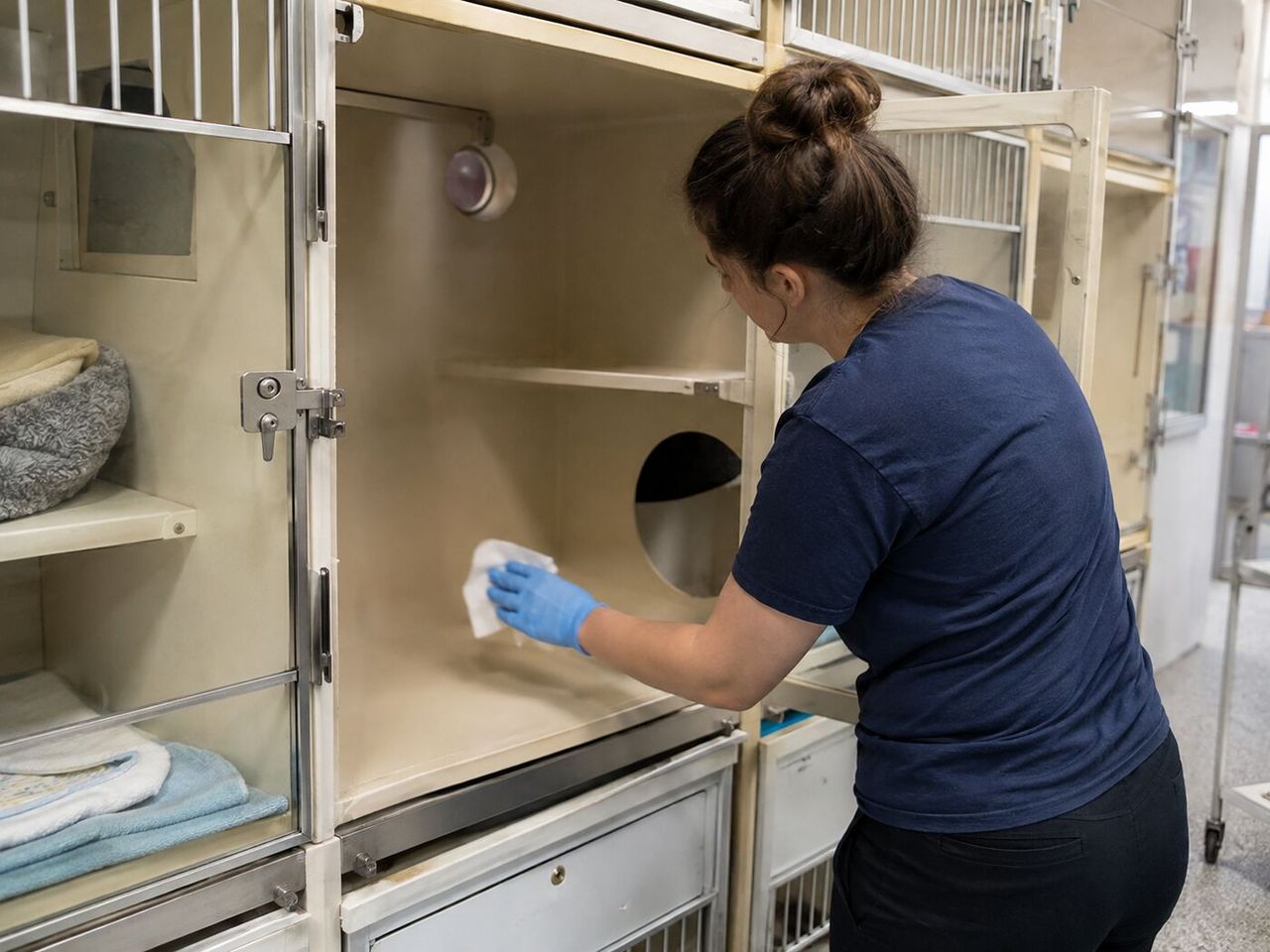
Multi-cat and foster math
Boxes: one per cat plus one, in separate locations. Disease-wise, shared boxes are the cattery’s common cup — during any GI or URI episode, assign the sick cat its own box and run that one on the between-every-change protocol. Panleukopenia in the house? The box zone gets the 9 oz/gal parvo-tier treatment — panleuk is a parvovirus and the litter station is its favorite address.
The toxoplasmosis paragraph (read if anyone’s pregnant)
No disinfectant practically kills Toxoplasma oocysts — ours included, and we’ll say it plainly. The defense is time: oocysts shed in feces need 1–5 days to become infectious, so daily scooping removes them before they’re dangerous. Gloves, hand-washing, and reassigning scoop duty away from pregnant household members complete the plan. Chemistry where chemistry works; schedule where it doesn’t.
Frequently asked
How do I disinfect a litter box properly?
Dump the litter, scrub the box with 2 oz/gal ArkGuard solution, keep it visibly wet 10 minutes, then rinse thoroughly and dry before refilling. The rinse-and-dry matters: cats reject chemical-smelling boxes, and rejected boxes mean floor accidents.
How often should litter boxes be fully cleaned?
Scoop at least daily; full dump-scrub-disinfect weekly for clumping litter households, and at every cat-change in fosters, catteries, or shelters.
Does ArkGuard kill toxoplasmosis in litter boxes?
No — and neither does anything else on a practical timescale. Toxoplasma oocysts are extraordinarily resistant; control is daily scooping (oocysts need 1–5 days to become infectious), gloves and hand-washing, and keeping pregnant household members off scoop duty. We'd rather tell you that than imply a spray solves it.