
Feline Calicivirus: The Sneeze That Tours the Whole Cattery
Last reviewed 2026-08-21
Every multi-cat facility knows the pattern: one cat sneezes on Monday, and by the weekend half the room has runny eyes, ulcered tongues, and no appetite. Feline upper respiratory disease travels as a pair — herpesvirus and calicivirus — and calicivirus is the one that matters to your cleaning program, because it’s the one built to survive it.
Know the enemy
Feline Calicivirus is a non-enveloped virus — the same tough-shelled architecture as parvovirus, which means no fragile fat membrane for ordinary cleaners to shred. It laughs at products that only claim “kills 99.9% of germs,” survives on dry surfaces for up to a month, and rides bowls, condo shelves, litter scoops, sleeves, and hands from cat to cat. Worse, recovered cats can shed it for months while looking completely healthy — the friendly greeter cat in the lobby can be the outbreak’s engine.
Why the labeled claim matters here
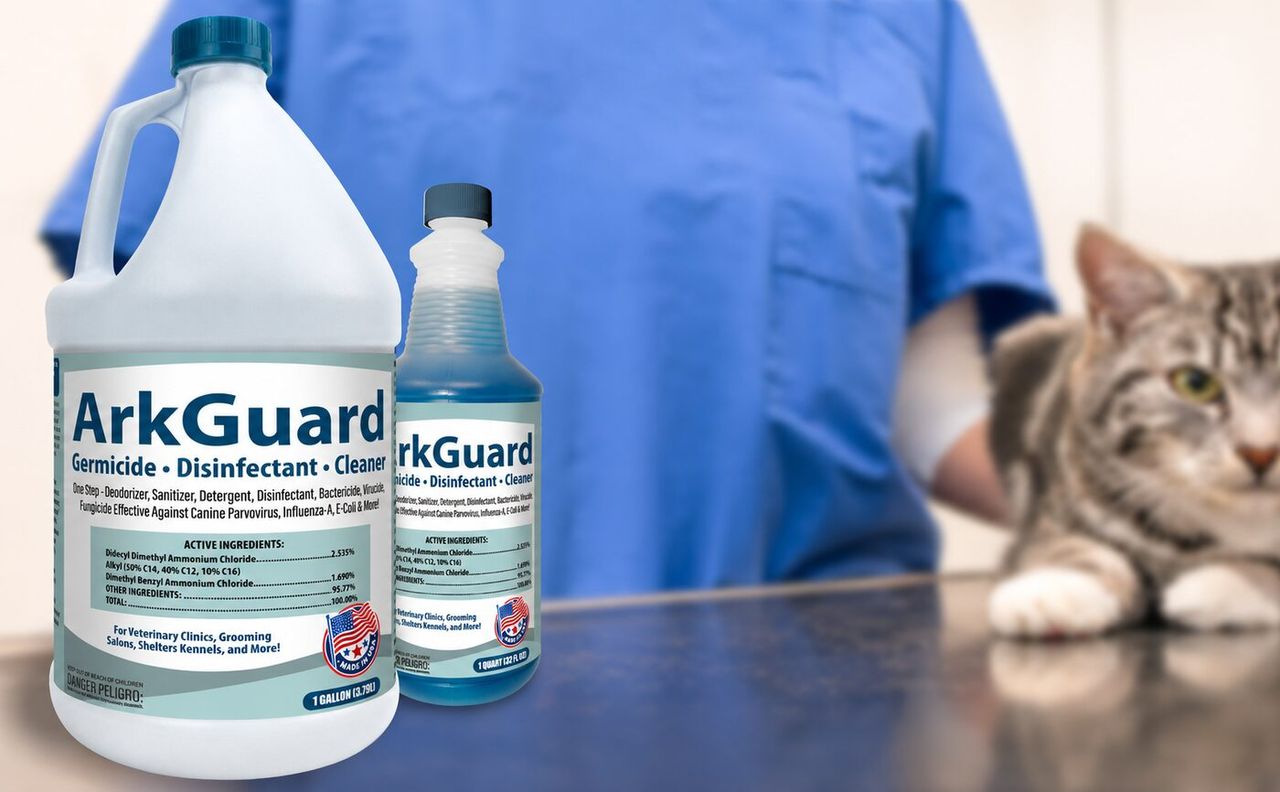
Against a non-enveloped virus, “disinfectant” is not a category — it’s a specific tested claim. Feline Calicivirus is on ArkGuard’s labeled virucidal list at the routine 2 oz/gal dilution, 10 minutes visibly wet on hard, non-porous surfaces. That’s the whole point of buying a registered product: when the organism is a hard target, the label tells you exactly what strength and time were actually tested, instead of leaving you to hope.
The cattery counter-program
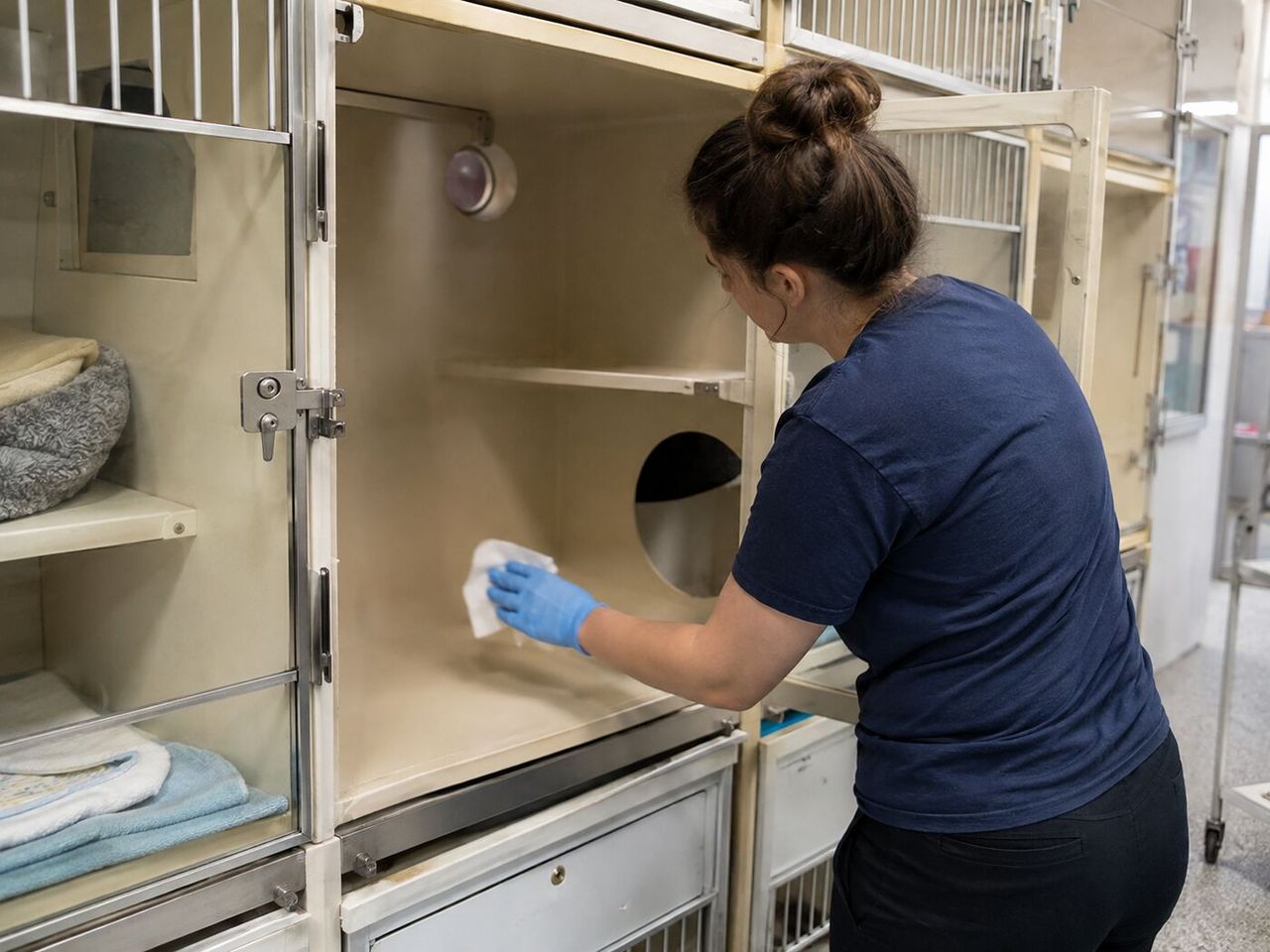
Calicivirus control is cat-room discipline executed on schedule: full condo turnover between residents (2 oz/gal, 10 wet minutes, complete drying before the next cat), bowls and fountains washed-disinfected-potable-rinsed daily, litter station protocol weekly and at every cat-change, and hand hygiene between rooms — because sleeves and palms are this virus’s favorite taxi. During an active URI cluster, shared surfaces move from daily to between-every-use, and the sneezing room’s tools stop traveling.
One more honesty note: stress reactivates herpesvirus in carrier cats and suppresses immunity generally, so a cat room that’s clean but chaotic still sneezes. Spot-clean occupied housing, deep-clean at move-out — calm handling is part of infection control, and the label’s remove-treat-dry-return sequence is built for exactly that rhythm.
Frequently asked
Does ArkGuard kill feline calicivirus?
Feline Calicivirus is on ArkGuard's labeled virucidal list at 2 oz per gallon with a 10-minute wet contact time on hard, non-porous surfaces. Calicivirus is a non-enveloped virus that many weaker products miss — a labeled claim matters here.
How long does calicivirus survive in the environment?
Up to a month on dry surfaces in the right conditions — far longer than enveloped viruses like herpesvirus. Bowls, condo surfaces, litter areas, and hands keep it moving between cats.
Why do cats get calicivirus even in clean catteries?
Because recovered cats can shed virus for months while looking perfectly healthy, and because the virus's durability means one missed surface re-seeds a room. Between-resident turnover with a labeled product plus shedding-aware housing is the counter.