
Kennel Cough: The Disease That Books a Room in Every Boarding Facility
Last reviewed 2026-08-21
Every boarding operator knows the sound — the honking, goose-like cough that starts in run 4 on a Tuesday and is in runs 2, 7, and 9 by Friday. Kennel cough is rarely deadly, but it’s the disease most likely to actually cost a pet-care business money: refunded stays, canceled bookings, a name on the local Facebook group, and two weeks of “temporarily closed for deep cleaning.”
Know the enemy
“Kennel cough” is a syndrome with several culprits, and the headliner is Bordetella bronchiseptica — a bacterium that colonizes the windpipe and airways. It travels two ways at once: through the air as coughed-out droplets, and across surfaces — shared water bowls, kennel bars, toys, gate latches, and the hands of every person who pets every dog. A single infected dog can shed bacteria before it ever coughs and for weeks after it stops, which is why outbreaks feel like they come from nowhere. They don’t. They come from Tuesday.
Why facilities are its favorite habitat
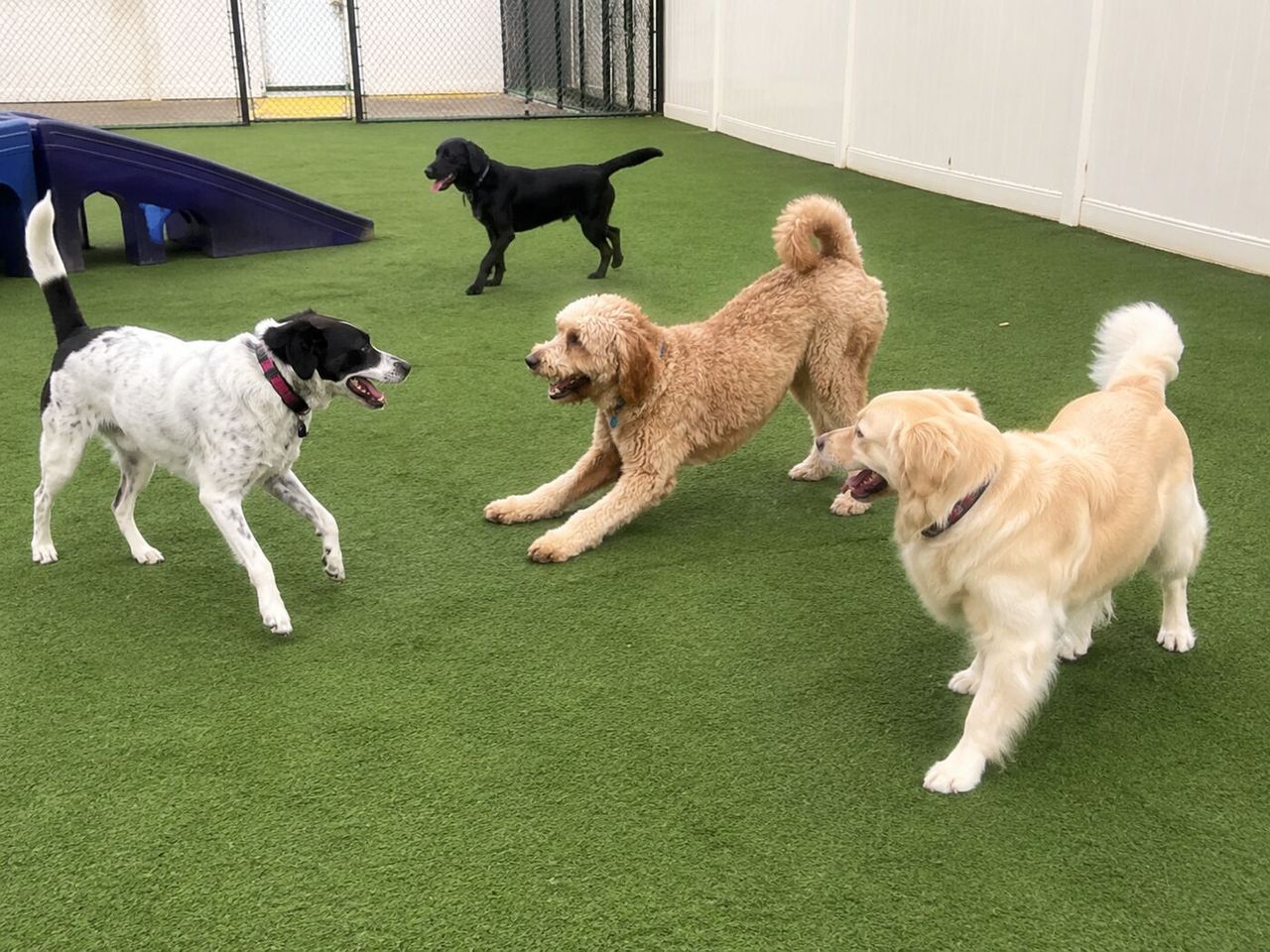
Boarding kennels, daycares, and grooming salons concentrate everything Bordetella wants: unrelated dogs, shared air, stress (which suppresses immunity), and dozens of mouth-touched surfaces. The disease writes its own transmission map through your building — water station to gate latch to lobby bench.
Breaking the chain
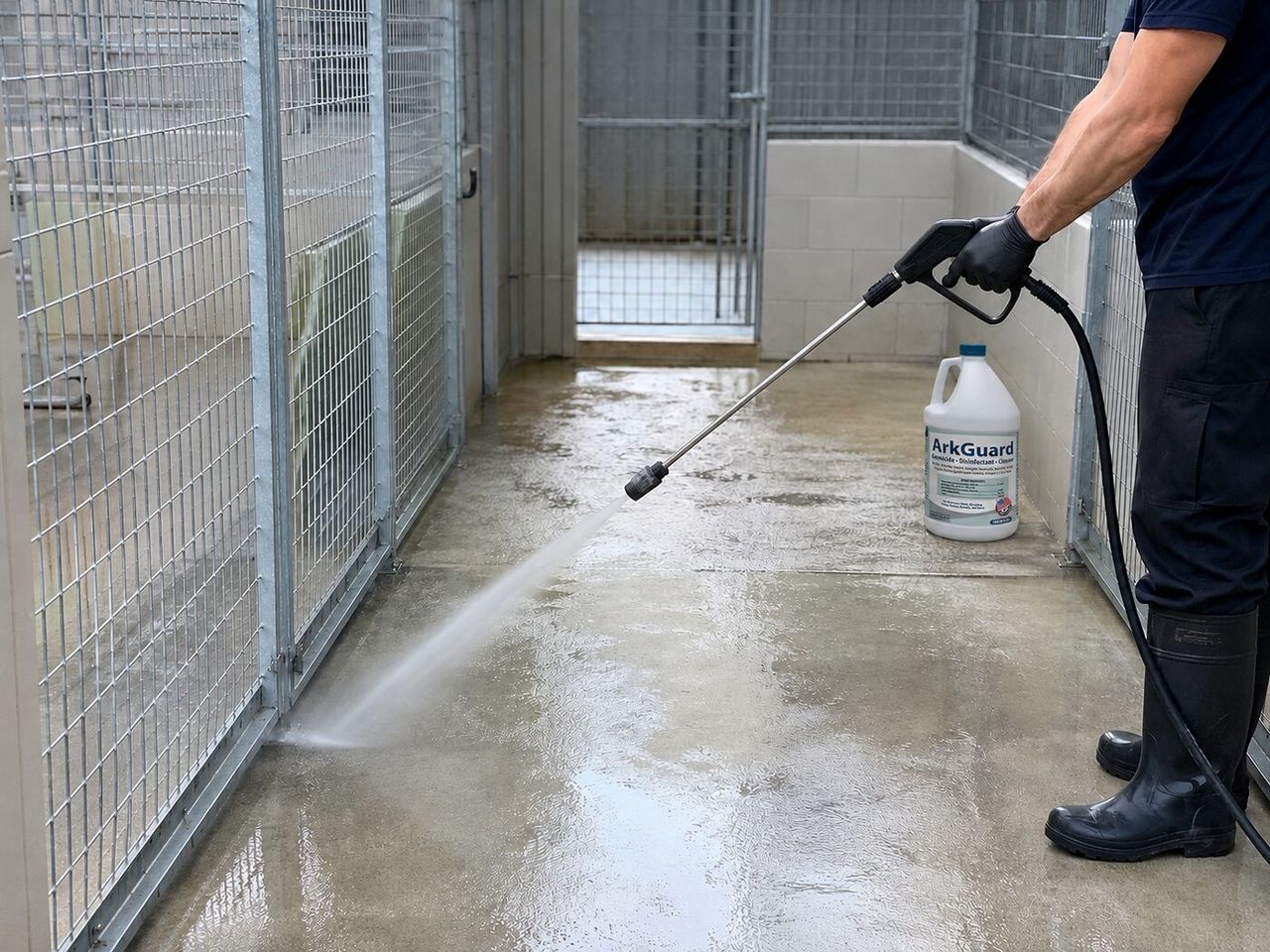
The surface leg of prevention is squarely on the label: Bordetella bronchiseptica is on ArkGuard’s kill list at the routine 2 oz/gal dilution, 10 minutes visibly wet. That means the daily kennel routine is already a Bordetella program if you run it honestly — with special attention to the shared items: water bowls (disinfected and potable-rinsed), toys on the wash-disinfect-rinse cycle, and the gate latches everyone touches and nobody cleans.
The other legs are operational, and honesty requires saying so: require Bordetella vaccination for boarding, screen for sniffles at drop-off, send symptomatic dogs home, and move air — ventilation dilutes what no spray can reach. A facility that does the surfaces and the screening almost never makes the Facebook group.
During an outbreak
Isolate coughers, then escalate the routine: shared surfaces between every use instead of daily, dedicated bowls per dog, foot-bath discipline at thresholds, and the full 2 oz/gal facility pass every night until two weeks past the last cough. The dilution chart stays the same — the frequency is what changes.
Frequently asked
Does ArkGuard kill the kennel cough bacteria on surfaces?
Bordetella bronchiseptica is on ArkGuard's labeled kill list at 2 oz per gallon with a 10-minute wet contact time on hard, non-porous surfaces. Surface control is one leg of prevention — vaccination, screening, and ventilation are the others.
How long does kennel cough survive on surfaces?
Bordetella can remain viable on surfaces and in the environment long enough to infect the next dog through shared bowls, kennel bars, and human hands — which is why between-dog disinfection of shared items matters even though the disease also spreads through the air.
Can a dog have kennel cough without coughing?
Yes — dogs can shed the bacteria before symptoms appear and for weeks after they stop coughing. That's why facilities treat every intake as potentially contagious rather than trusting a healthy appearance.