Dog Toys, Bowls & Hard Accessories: The Wash–Disinfect–Rinse Cycle
Last reviewed 2026-08-20
Everything on this page goes in a mouth, which sets the two rules that run the whole article: only hard, non-porous items can be disinfected at all, and every disinfected mouth-item gets a potable water rinse afterward — that rinse is printed on the label, not a suggestion.
Sort the toy box first
Cycle-able (hard, non-porous): rubber Kongs and chew rings, hard nylon chews, plastic balls and chuck-it launchers, slow-feeder bowls and lick mats (check for deep scratches), puzzle feeders’ hard bodies, crate pans, food scoops, and metal or ceramic bowls.
Laundry (porous but washable): rope toys, plush toys with intact seams, fabric frisbees, bedding, towels, collar and leash webbing. Hot machine wash, full dry. ArkGuard carries no fabric claim and we don’t pretend otherwise.
Trash: anything a sick dog gut-chewed, toys with torn stuffing or cracked cores, tennis balls past their fuzz (they’re sponges with a skin), and any porous toy after parvo or ringworm in the house — a two-dollar toy is not worth a relapse.
The cycle for hard items
The three-basin rhythm, at the utility sink or the kitchen sink after dinner dishes:
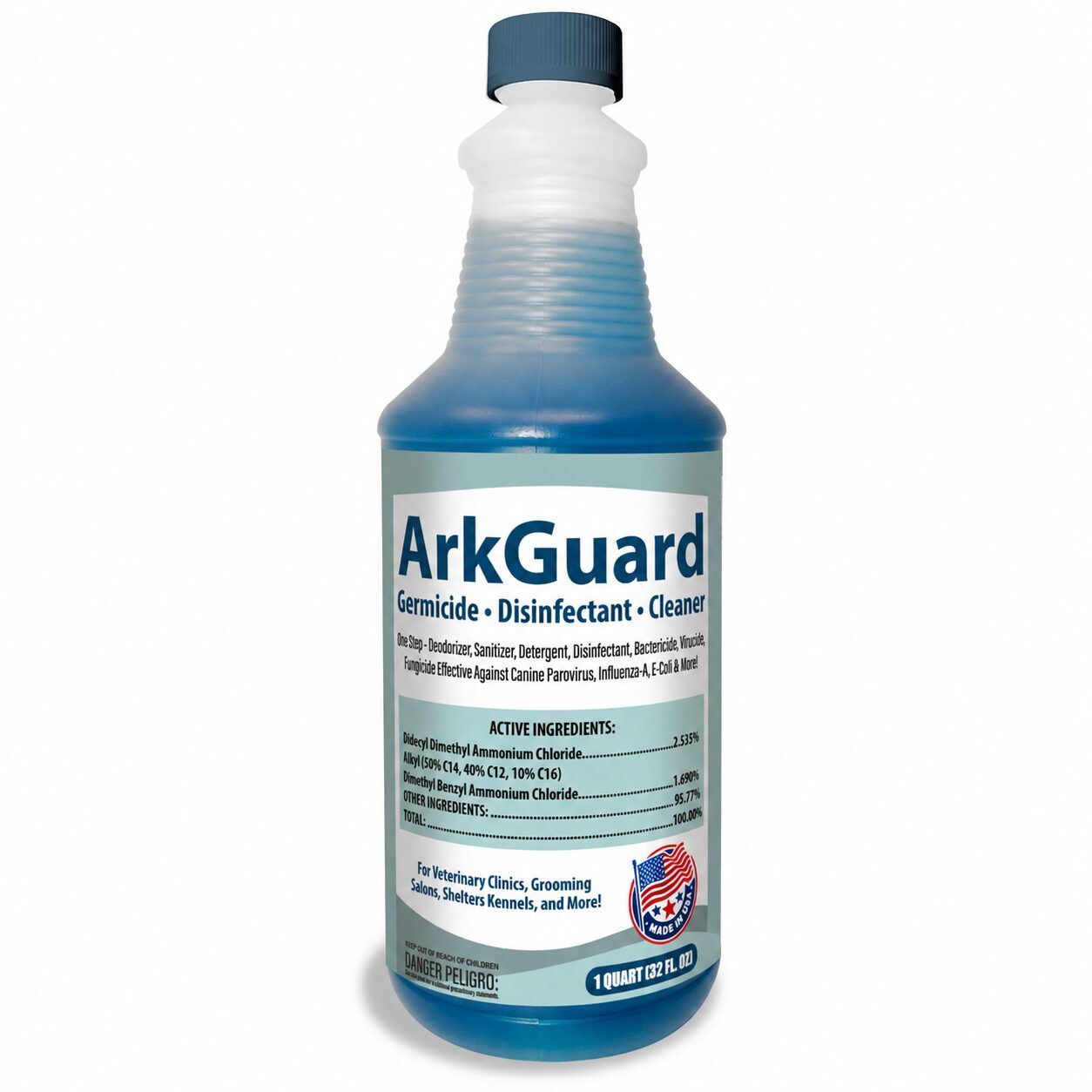
- Wash. Scrub visible grime, slobber film, and food residue with the item’s normal soap — or ArkGuard itself at the heavy-duty 1 oz-per-quart rate. Rinse the soap off (soap residue deactivates quats).
- Disinfect. Immerse in a basin of 2 oz/gal solution — the label covers immersion — or spray thoroughly. Hold the full 10 minutes; weight floating toys down with a plate.
- Rinse & dry. Thorough potable-water rinse, then air dry on a rack. Squeeze-toys and Kongs: squeeze rinse water through the cavity a few times — the inside is part of the toy.
Weekly for healthy single-pet homes; daily in facilities, multi-dog households, and any time someone’s ill. During a parvo event, hard toys from the affected dog get the 9 oz/gal tier — or, cheaper and safer, the trash.
The gear people forget
Water fountains grow biofilm in every channel — disassemble weekly, cycle every hard part, rinse well (and replace filters; they’re porous). Brushes and combs carry skin flora and ringworm spores between coats; the label’s salon-tool immersion applies at home too. Crate pans and puzzle-feeder bases join the weekly cycle. The toy bin itself — plastic, hopefully — gets sprayed while it’s empty, or it re-seeds every toy you just cleaned.
Shared-toy environments (daycares, foster homes, training clubs) should run the cycle between groups, not just when things look dirty — the daycare playbook shows the rotation that makes it painless.
Frequently asked
How do I disinfect dog toys safely?
Hard, non-porous toys only: scrub off grime, soak or spray with 2 oz/gal ArkGuard solution for the 10-minute contact time, then rinse thoroughly with potable water and air dry. The rinse is mandatory for anything that goes in a mouth.
Can rope toys and plush toys be disinfected?
No — fabric and rope are porous, and no surface disinfectant carries claims there. Machine-wash them hot and dry fully, or discard them after illness. Any toy a sick dog heavily chewed is usually a discard.
How often should bowls be disinfected?
Wash daily like your own dishes; run the full disinfect-and-rinse cycle weekly for healthy single pets, and daily in multi-dog homes, during any illness, or in facilities.