
Dog Daycare Disinfection: Play Floors, Toys, Gates & the Midday Reset
Last reviewed 2026-08-20
Daycare is a room full of unrelated immune systems sharing one floor, one water bowl if you let them, and forty tennis balls. The disinfection program has to run around the dogs — you can’t clear the building at noon. Here’s the rhythm that works.
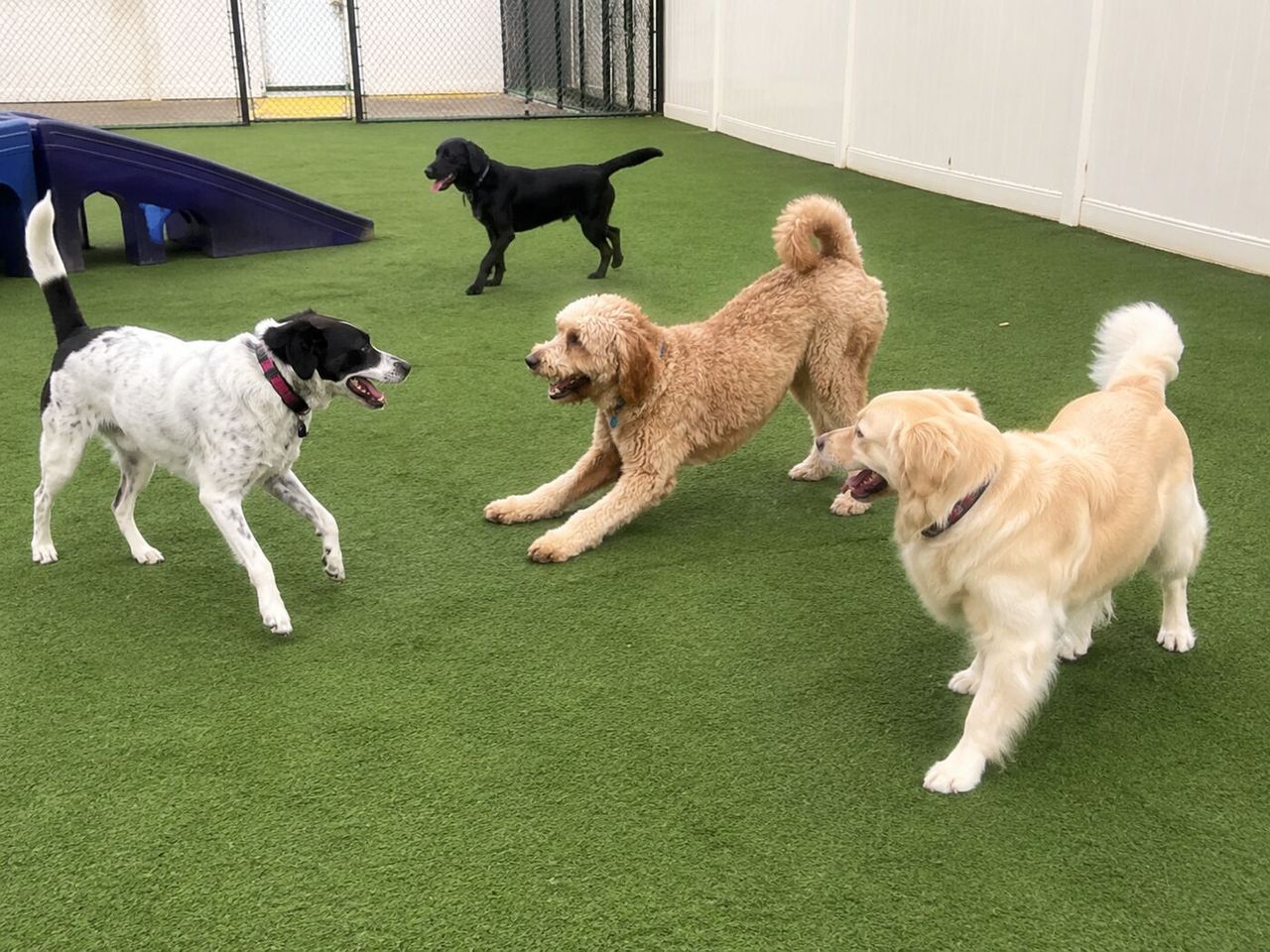
The three-speed floor program
Speed 1 — the accident (instant). Solids up, spot cleaned, then sprayed to visibly wet with 2 oz/gal solution from the wall-mounted caddy. The habit to train: nobody walks past a wet spot; the spray bottle is never more than twenty feet away.
Speed 2 — the midday reset (rest time). While the pack is crated for lunch rest, hit the high-traffic zones: entry gates, the water-station splash zone, favorite corner posts, and any zone that hosted a scuffle or a squatter. Fifteen minutes with the pump sprayer keeps the afternoon session on a morning-clean floor.
Speed 3 — the close (full protocol). Dogs out, toys collected, floor swept and squeegeed, then the full 2 oz/gal, 10-minute visibly wet pass — floor, wall splash zone, gate hardware, bench legs. Air-dry overnight; the label’s “dry before animals return” rule is free when the building’s empty anyway.
Kennel cough: what surfaces can and can’t do
Bordetella is on the ArkGuard label at the routine rate, and dutiful surface work removes one transmission route. But kennel cough is also airborne dog-to-dog — so pair the chemistry with the operational stuff: vaccination requirements, sniffle-screening at drop-off, send-home rules, and real ventilation. A daycare that only sprays will still get outbreaks; a daycare that does both rarely does.
The giardia paragraph other sites won’t write
Giardia cysts laugh at quats — ours and everyone’s. If a fecal accident might be from a loose stool, the play is physical: immediate pickup, detergent scrub, hot-water rinse, squeegee dry, and that dog moves to solo potty breaks pending a vet check. We’d rather tell you the limit than sell you false confidence — what disinfectants can’t kill is part of knowing what they can.
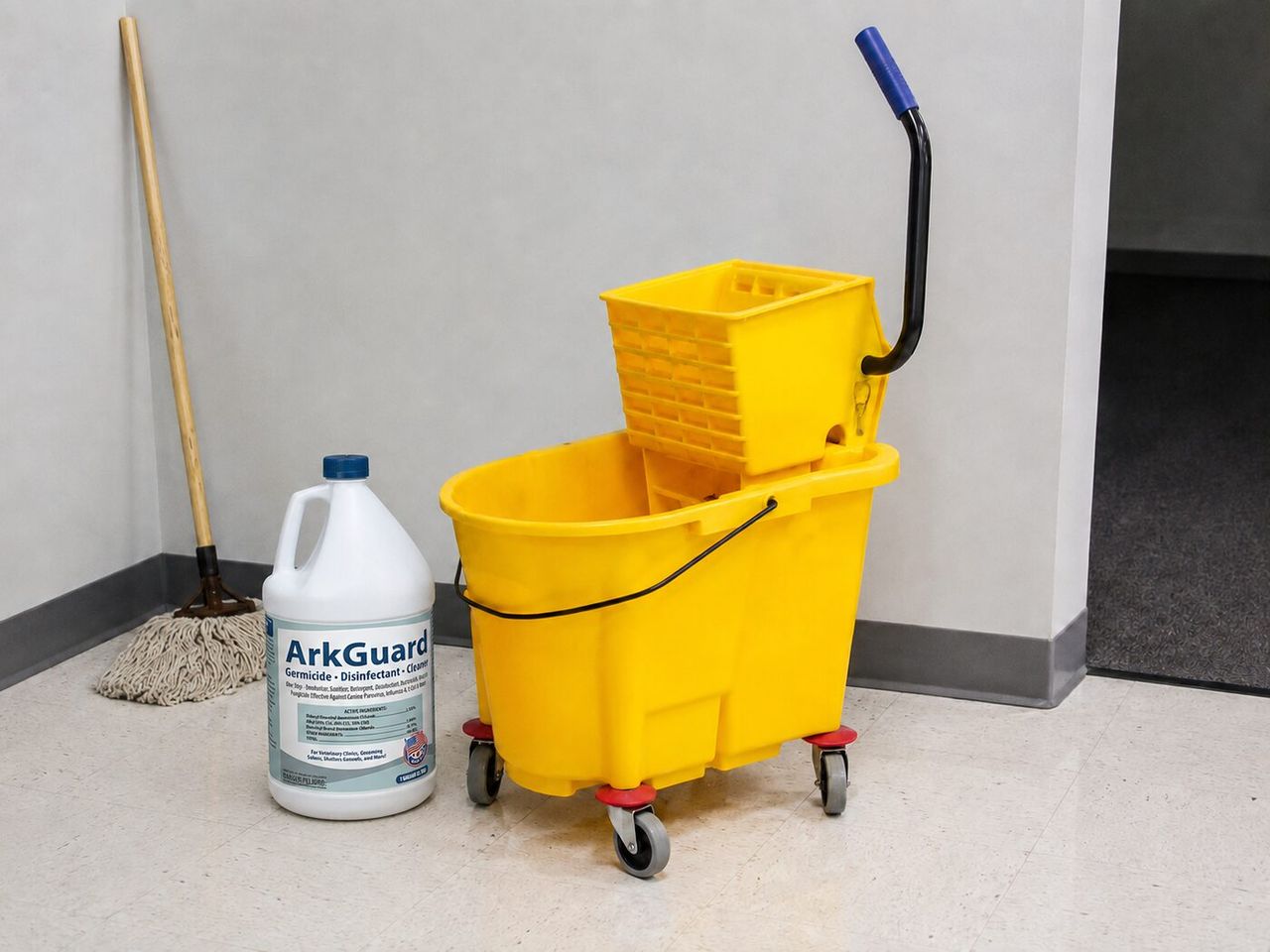
Toys, bowls, gates, turf
Hard toys rotate through a wash–disinfect–rinse cycle in a utility sink: scrub, 10-minute 2 oz/gal soak, potable rinse, dry rack (mouth-contact rule). Rope and plush toys get laundered or binned — no spray claim on fabric. Water stations: dump, scrub, disinfect, rinse, refill at least daily; the splash mat under them daily too. Gate latches and half-door tops — the most-touched, least-cleaned objects in any daycare — get a wipe at every speed-2 reset. Turf yards run the artificial turf protocol weekly and after any illness.
One gallon of concentrate makes up to 64 gallons of solution — a daycare’s entire month of three-speed cleaning usually lives in one jug.
Frequently asked
How often should a daycare disinfect play floors?
Spot-treat accidents immediately, run a midday reset on high-traffic zones while dogs are in rest crates, and do the full-floor 2 oz/gal pass with a 10-minute wet contact time after close, every day.
Does ArkGuard kill kennel cough on surfaces?
Bordetella bronchiseptica is on ArkGuard's labeled kill list at 2 oz per gallon with a 10-minute contact time on hard, non-porous surfaces. Remember kennel cough also spreads dog-to-dog through the air — surface control is one leg, screening and ventilation are the others.
What about giardia in daycares?
Honest answer: quat products, ArkGuard included, are not reliable against giardia cysts. Control is pickup-within-seconds, dedicated potty areas, hot water washdowns, drying time, and excluding symptomatic dogs — not any spray.