Vet Clinic Disinfection: Exam Rooms, Kennels, Lobby & Iso
Last reviewed 2026-08-20
A clinic’s disinfection program has one special property: the sickest animals in town walk through the front door on purpose. Here’s how ArkGuard covers each zone — with the exact dilutions, so this page can go straight into your SOP binder.
Exam rooms: the between-patient rhythm
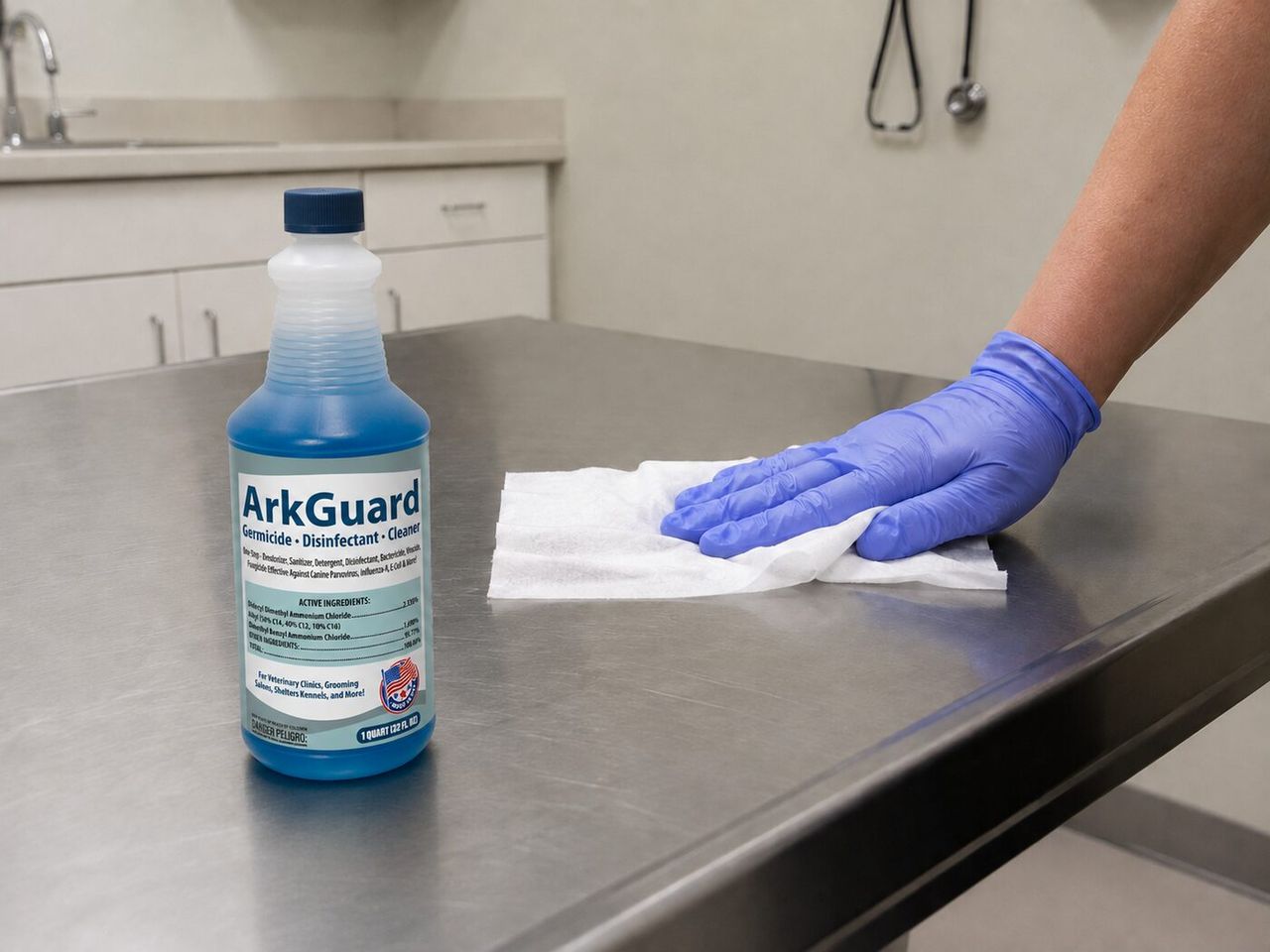
Between every patient: exam table, scale platform, counter edge, door lever, and the floor spot under the table if there was an accident. A labeled 32 oz bottle of 2 oz/gal-equivalent mix (½ oz per bottle) lives in each room — spray to visibly wet, let it work while you write the chart, wipe or air-dry. For suspected infectious cases, the room gets the full treatment before the next appointment: all touched surfaces, 10 minutes wet, no shortcuts.
End of day: floors mopped at 2 oz/gal, walls at splash height, and the little things everyone forgets — light switches, cabinet pulls, the stethoscope hook.
Treatment and hospitalization
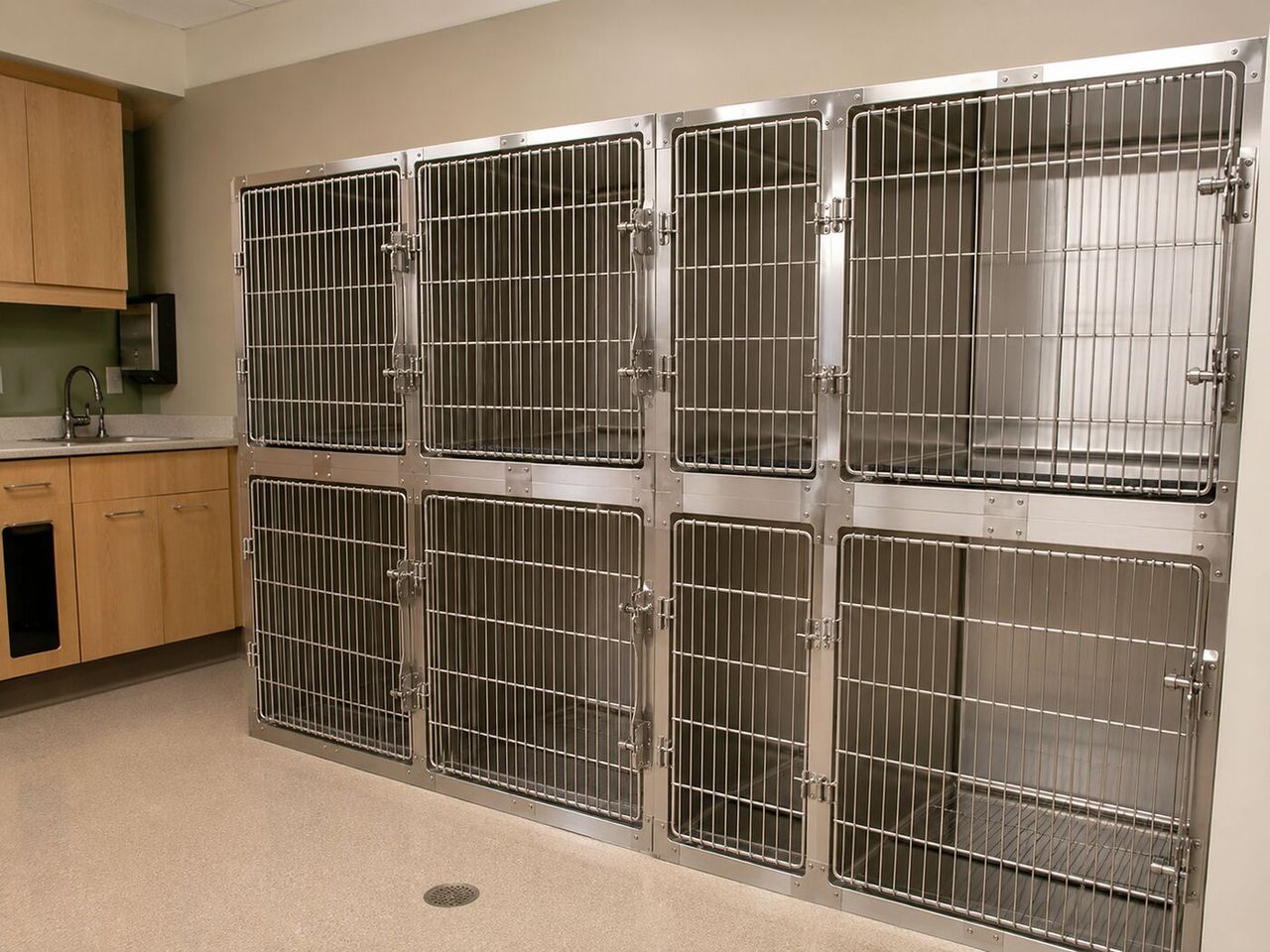
Treatment tables and wet tables follow exam-room rules. Hospitalization kennels turn over like boarding kennels: strip, pre-clean, 2 oz/gal to visibly wet, 10 minutes, dry, rebed. Stainless cage banks love this chemistry — quats at use dilution won’t haze or pit stainless the way harsher oxidizers can (more on stainless). Bowls and litter pans: wash, disinfect, then potable water rinse, every time — that rinse is a label requirement for anything that touches food or water.
Isolation: the clinic inside the clinic
Iso gets its own everything: dedicated pump sprayer, dedicated mop, gowns and gloves at the door, and a foot bath (2–4 oz/gal, one inch deep, remade daily) at the threshold. Parvo, pan-leuk, or ringworm case inside? Surfaces get the appropriate protocol — 9 oz/gal for parvo (the full protocol), 2 oz/gal for the fungal and bacterial list — between every entry, not once a day.
Lobby and front desk
The lobby is where infectious animals sit before anyone knows they’re infectious. Daily minimum: seating, check-in counter, door hardware, the payment terminal’s non-electronic surround, and the floor. Accidents get spot-treated immediately: pick up solids, clean, then disinfect the spot to visibly wet. A discreet caddy behind the desk with a labeled bottle and paper towels means the response time is seconds.
Instruments, clippers, and the ultrasonic bath
The label supports ArkGuard as a pre-soak: surgical instruments at 2 oz/gal for a minimum of 10 minutes before cleaning and sterilization (metal out after 10 minutes — don’t leave instruments swimming), and ultrasonic-bath disinfection cycles at the same dilution. Clipper blades: spray a 2 oz/gal mist on the running blade angled downward, never into the housing — that direction is on the label too. None of this replaces sterilization for anything that breaks skin; a disinfectant is not a sterilant, and we won’t blur that line.
Make it auditable
Print the dilution chart for the mop sink, keep the SDS in the binder, and put mix dates on every bottle. When the state inspector asks how you disinfect, the answer should be on the wall, not in someone’s memory.
Frequently asked
What do you disinfect between every patient in an exam room?
The exam table, scale, counter edge, door handle and anything the animal or client touched — sprayed or wiped to visibly wet with 2 oz/gal solution and kept wet the labeled time. Table between every patient; full room at day's end.
Can ArkGuard be used on surgical instruments?
The label covers a pre-soak for surgical instruments in 2 oz/gal solution for a minimum of 10 minutes — as a pre-cleaning step only. Instruments must still be sterilized before use; a surface disinfectant is never a sterilant.
What dilution for a parvo case in the clinic?
9 oz per gallon in the affected areas — exam room, run, transport route — kept visibly wet 10 minutes after pre-cleaning. Post the mix on the wall in iso so it's never improvised.