Stainless Steel: Cage Banks, Bowls, Tables & Why Quats Love It
Last reviewed 2026-08-20
Stainless steel is the house material of animal care — cage banks, exam tables, grooming tubs, feeding bowls — because it’s the closest thing to a perfect disinfection surface: non-porous, seamless when welded well, and indifferent to water. It has exactly three failure modes, and all of them are habits, not chemistry.
Why quats and stainless are a good marriage
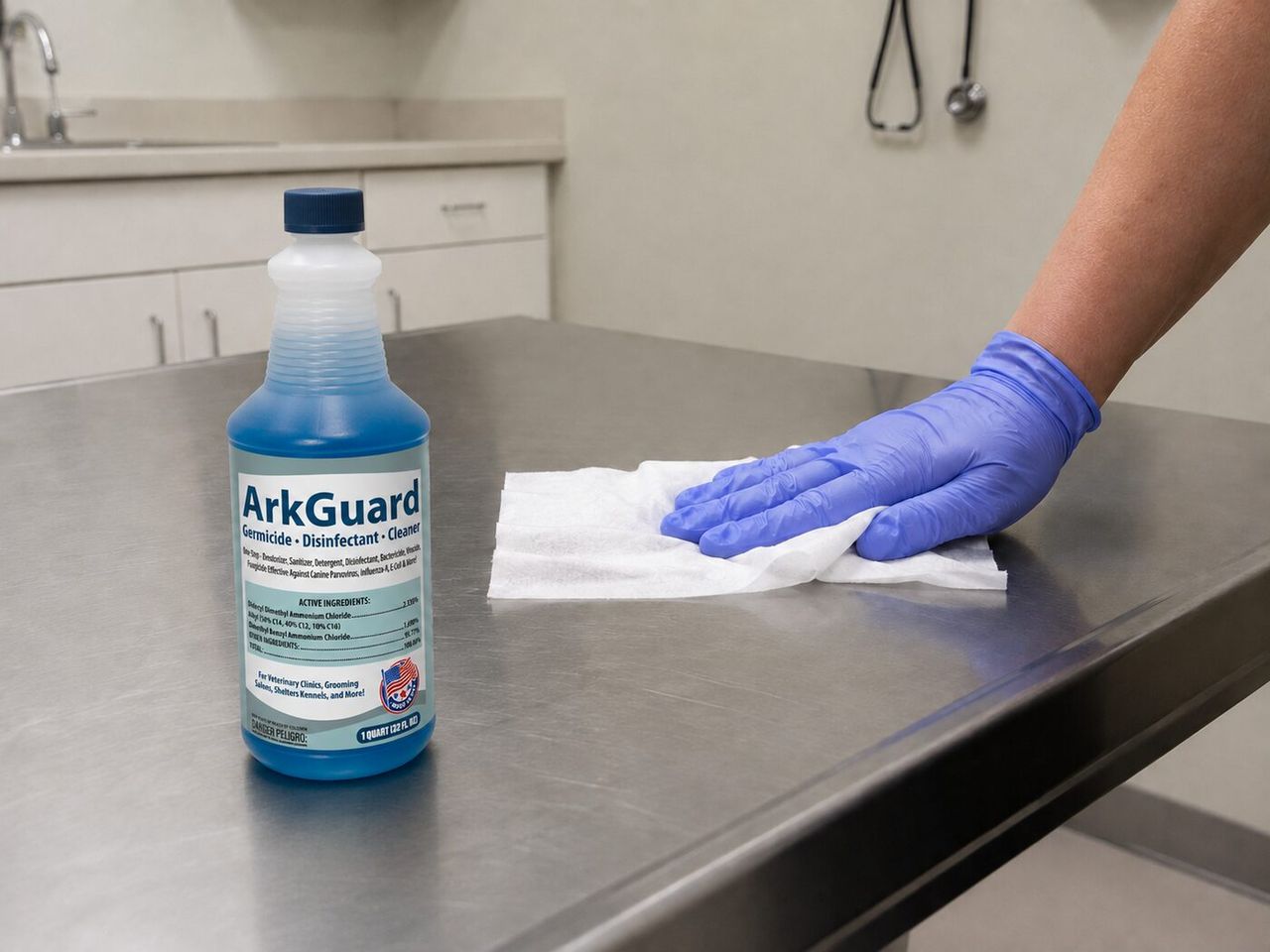
Chlorine bleach — the default “strong” cleaner — is stainless steel’s slow enemy: chloride pitting, tea-staining, and dulled polish on repeated exposure. Quat chemistry at use dilution carries none of that baggage, which is one quiet reason animal facilities standardized on germicidal quat cleaners decades ago. The routine: spray or wipe ArkGuard at 2 oz/gal to visibly wet, hold 10 minutes (3 for sanitizing-level touch-ups, the full chart here), then air dry or squeegee. No rinse needed on cages and tables — steel dries spotless.
Failure mode 1: skipping the bowl rinse
The label draws a bright line at mouths: anything that holds food or water — bowls, feeders, waterers, fountains — gets scrubbed, disinfected, and then rinsed with potable water before reuse. Every time, no exceptions, and it’s the step busy facilities shave first. Build a three-basin habit at the utility sink (wash → disinfect soak, 10 minutes, the label covers immersion → potable rinse) and the rule enforces itself. Same cycle for hard toys and slow-feeder inserts.
Failure mode 2: treating the panel, missing the hardware
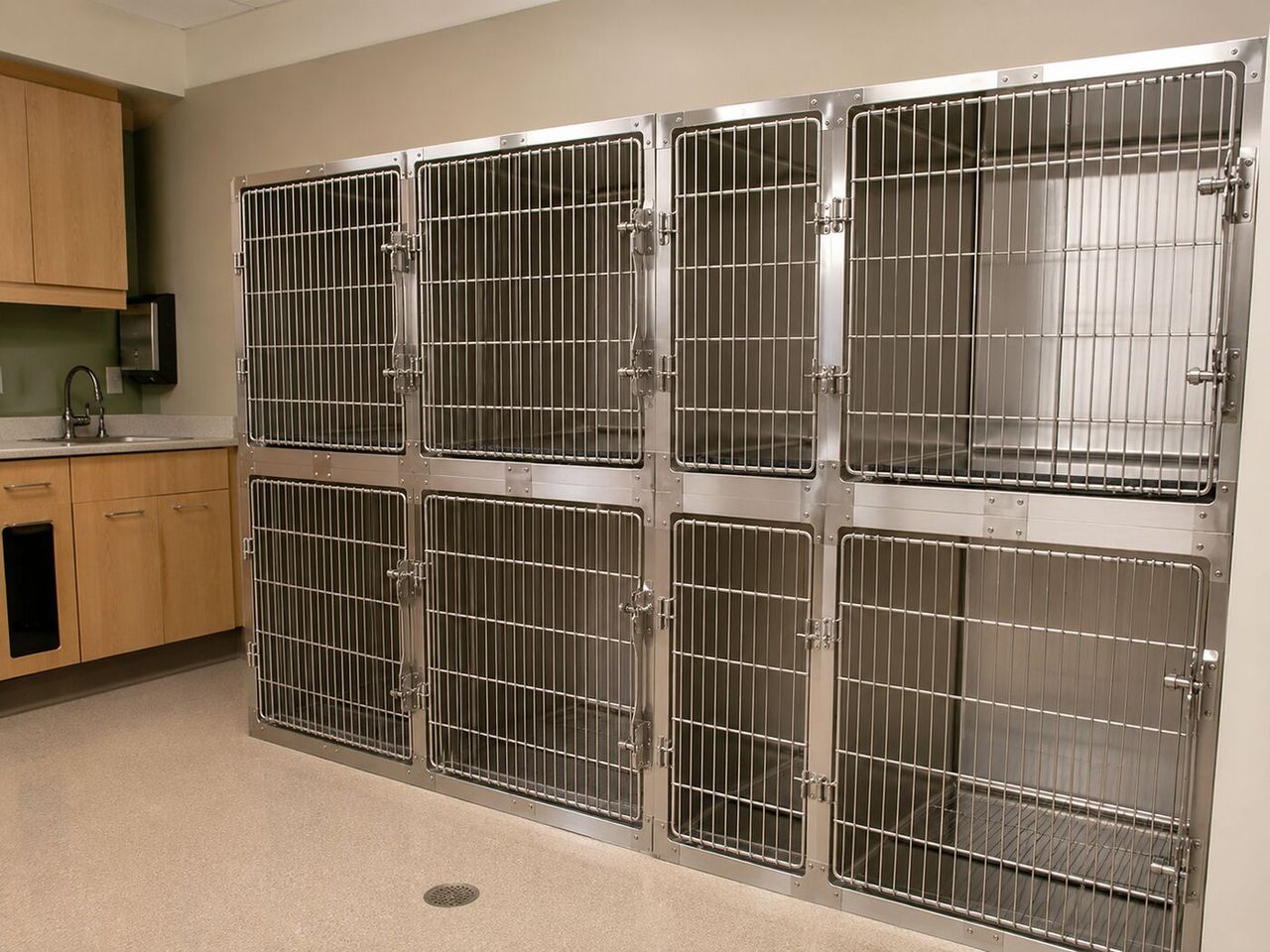
Smell or swab a “clean” cage bank and the hits come from geometry: hinge knuckles, latch tongues, bolt heads, the rolled lip under the front edge, and the track a squeeze-panel rides in. Flat steel wipes itself; hardware needs the pump sprayer’s stream setting and a deliberate two seconds each. Cage banks on wheels: the casters have been rolling through everything the floor hosted — spray them in the same pass.
Failure mode 3: scratched steel pretending to be smooth
Wire brushes, scouring powder, and years of buckle-drags eventually cross-hatch a surface until it holds soil below scrub depth — functionally porous, with a shine. Clean with non-scratch pads, retire or re-polish steel that’s gone gray and matte, and inspect welds and seams yearly. One more line for clinics: ArkGuard is not for use on critical or semi-critical medical device surfaces — instrument pre-soaking is on the label, sterilization is its own discipline, and the vet-clinic playbook keeps those lanes separate.
Steel rewards the boring routine like no other surface: spray, wait, dry, done — and it looks like the day it was welded for twenty years.
Frequently asked
Is ArkGuard safe on stainless steel?
Yes — quat solutions at use dilution are among the gentlest disinfecting chemistries on stainless, without the pitting and rainbow-staining risks of chlorine-based products. Spray to visibly wet, hold the contact time, and air dry or wipe.
Do stainless bowls really need rinsing after disinfection?
Always. The label requires food- and water-contact items — bowls, feeders, waterers — to be rinsed with potable water after disinfection, every time. Disinfect, rinse, dry, refill: that's the full cycle.
Why does my steel table still smell after cleaning?
Scratched or corroded patches hold organic film below scrub depth, and so do bolt heads, hinge knuckles, and the underside lip. Treat hardware and seams deliberately, and resurface or replace steel that's lost its polish.