
Tile, Epoxy & VCT: Getting Full Disinfection From 'Easy' Floors
Last reviewed 2026-08-20
Tile, epoxy, and sheet vinyl are what animal facilities install because they disinfect easily — glazed and coated surfaces are as non-porous as it gets. Which makes their failure points interesting: on these floors, disease and odor don’t live on the field of the floor. They live in the lines.
The easy 95%
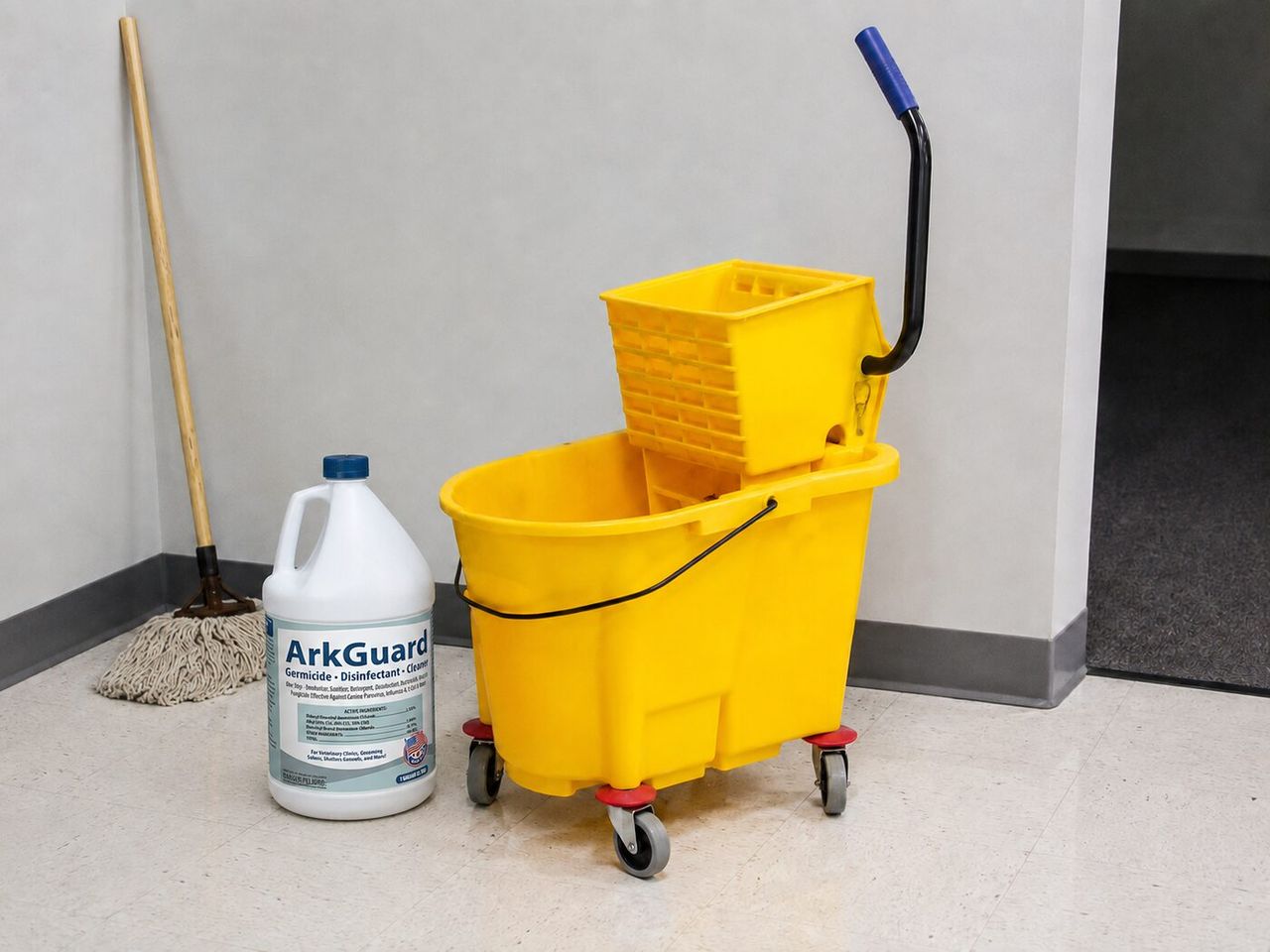
Glazed ceramic, porcelain, epoxy and polyurea coatings, and vinyl (sheet or VCT) all take the standard program without drama: sweep or dust-mop, then mop or spray ArkGuard at 2 oz/gal, keep visibly wet 10 minutes, air dry — the label says rinsing floors isn’t necessary unless they’ll be waxed or polished. Matte and textured tiles (chosen for paw traction) need a touch more solution to keep the texture glossy through the dwell — same rule as rubber mats.
The 5% that runs the outcome
Grout lines. Cement grout is a porous mineral strip every four inches across an otherwise perfect floor. Unsealed, it drinks urine and mop water for years and returns odor forever (the odor map). The fix costs a Saturday: deep- scrub the lines with ArkGuard at the 4 oz/gal heavy-duty rate, let them dry completely, apply a penetrating grout sealer — and from that day the grout is sealed-surface territory and the whole floor finally matches its claims. Epoxy grout, if you’re still building: worth every penny.
Coving and corners. The wall-floor joint collects what squeegees push and mops skip. Coved (rounded) bases exist to make this seam cleanable — spray the cove line deliberately during the weekly pass. Square-corner rooms: the corner triangle behind door swings is the most skipped square foot in any clinic.
Wax and finish layers. Waxed VCT looks great on day one; under claws, wheels, and daily wet cleaning it scuffs, hazes, and starts shedding — and worn wax patches clean differently than intact ones, so the floor stops behaving uniformly. In animal rooms, skip sacrificial wax entirely where you can; where you can’t, know that a floor about to be waxed or polished is the label’s one do rinse first case.
Cracked tiles and lifted seams. A cracked tile or curling vinyl seam is a trapdoor to the subfloor — unclaimable space collecting everything. Repair beats any protocol; flag and fix within the week.
Room-by-room notes
Vet exam rooms and grooming salons: the daily between-patient rhythm rides on these floors — keep a labeled bottle per room and let the floor’s 10-minute dwell overlap with table turnover. Kennels with epoxy: you own the best floor in the industry; the kennel routine plus a yearly recoat inspection keeps it that way. Home kitchens and mud rooms with tile: the entryway program applies — and yes, the potable rinse rule follows food-prep counters even at home.
Frequently asked
Is grout disinfectable?
Only sealed grout. Unsealed cement grout is porous and drinks solution before it can hold a contact time — scrub it, then seal it, and from then on the floor's weakest line joins the protocol.
Does ArkGuard need rinsing on tile or epoxy?
Rinsing of floors is not necessary unless they are to be waxed or polished. Let them air dry; food-contact surfaces are the exception and always get a potable rinse.
Will a disinfectant strip floor wax?
Quat solutions at use dilution are gentle on finishes, but any wax layer under animal traffic will wear and haze regardless. In animal rooms, unwaxed epoxy or tile beats a waxed floor — one less layer between your solution and the actual surface.